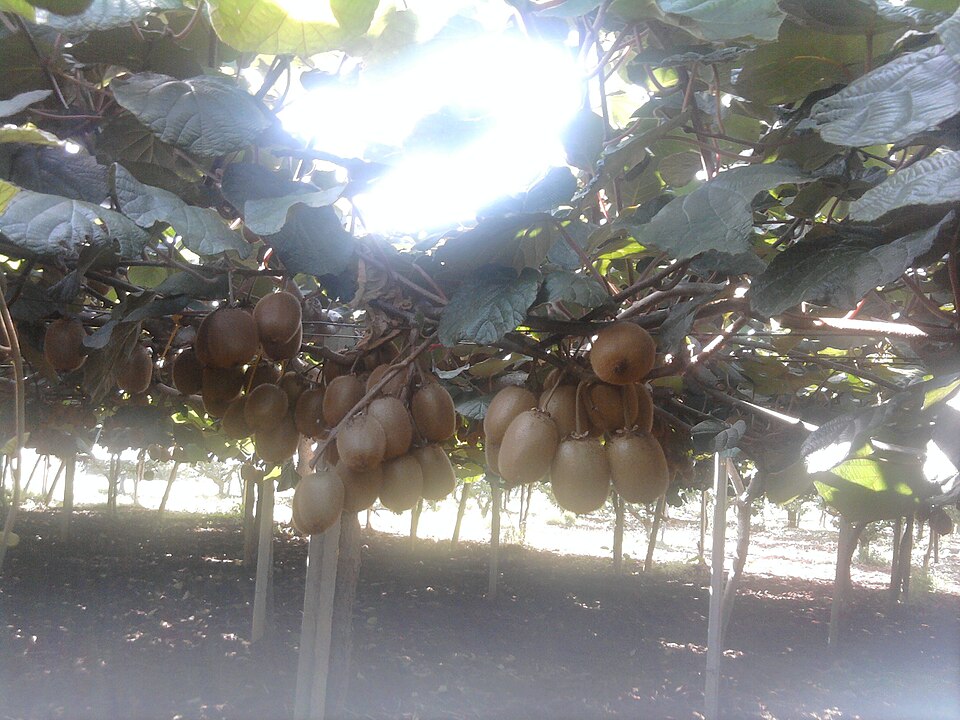
 Photo: Jack21 · CC0 · source ↗

Kiwi cultivation (Himachal)
Kiwifruit (Actinidia deliciosa) is a deciduous, dioecious climber that is grown commercially in the mid-hill belt of Himachal Pradesh, with smaller plantings in Uttarakhand, Sikkim, Arunachal Pradesh, Nagaland and Meghalaya. India's first commercial kiwi orchard was established at Dr Y S Parmar University of Horticulture and Forestry (UHF), Solan, in 1985, and the university remains the lead institute for kiwi research and extension in the country.
Key characteristics
- Scientific name: Actinidia deliciosa
- Growing belt: Solan, Sirmaur, Mandi, Kullu and Shimla districts of Himachal Pradesh; similar elevations in adjoining hill states
- Recommended cultivars: Allison, Abbott and Bruno among female fruiting types, with Tomuri or Matua as pollenisers
- Yield: 60-70 kg/plant/year on average; mature vines bearing 100 kg and more
Cultivation
Plants are propagated through hardwood and semi-hardwood cuttings or grafting and planted at spacings of around 5 x 6 m on the T-bar or pergola trellis system. A pollinator-to-female ratio of about 1:8 is maintained. Vines require well-drained loamy soils at elevations of 800-1,800 m and a frost-free flowering window. Annual winter pruning, summer training and drip irrigation are essential. Brown manuring or hand-pollination is sometimes used in dispersed plantings.
Pest and disease profile
Major problems include leaf spot, root-collar rot, scale insects and mealybug. Bird damage and hail are seasonal risks in hill orchards.
Adoption and use
Himachal Pradesh is the leading commercial kiwi-growing state in India; production also supplies regional markets through model project subsidies promoted by the National Horticulture Board. The package of practices developed by UHF Solan provides the technical backbone for new plantings.
Related entries
(No close sibling entries in this bundle group.)
References
- Kiwi. NHB model project report.
- Kiwi cultivation on mid hills of Himalayan mountains. Abhinava Krishi.