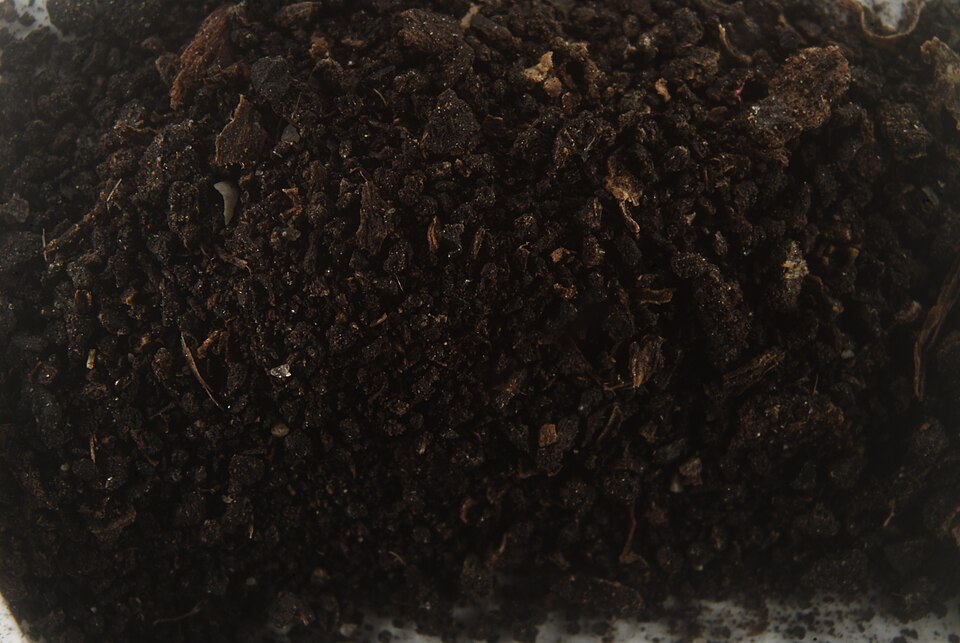
 Photo: Sci1972 · CC BY-SA 4.0 · source ↗

Humic acid (Humic 99 / potassium humate) in paddy
Potassium humate, marketed under brand names such as Humic 99, is a leonardite-derived soil conditioner used in paddy to stimulate root proliferation, enhance soil organic-carbon status and improve nutrient retention on heavily fertilised and long-cropped rice soils. It is notified under the FCO biostimulant schedule and sits within the broader humic substances category alongside Humic Acid and Fulvic Acid.
Composition
- Active substance: humic acid extracted from leonardite (oxidised soft brown coal)
- Typical analysis: 50-70% humic acid, 8-12% K2O
- Form: free-flowing black powder, flake or liquid concentrate
- Solubility: fully water soluble (potassium salt of humic acid)
Mode of action
The carboxyl and phenolic groups of humic acid chelate cations, raise cation-exchange capacity of the rhizosphere and present nutrients in plant-available form. Direct effects on plant roots include cell-membrane permeability changes and proliferation of fine roots, which improve nutrient uptake efficiency. The contribution to NPK supply is minor; the value is in nutrient-use efficiency and root architecture, not bulk nutrition.
Target use and dose
In paddy, humic acid is typically used at 0.5-1 kg per acre, applied through one of three routes:
- Drip or sprinkler fertigation in aerobic and direct-seeded rice systems.
- Broadcast with basal fertiliser at land preparation; see Paddy First Dose Fertilizer.
- Tank-mix with top-dressing urea at active tillering (Paddy Tillering Top Dressing).
It is commonly stacked with Seaweed Extract Paddy or with micronutrient sprays at the panicle initiation stage.
Safety and regulatory status
FCO-notified plant biostimulant/soil conditioner. Non-toxic to humans, animals and soil microbes at field rates. Should be kept dry in storage; high humidity causes caking and loss of solubility.
Related entries
See also: Humic Acid, Fulvic Acid, Humic Fulvic Acid Input, Paddy Tillering Top Dressing, Paddy First Dose Fertilizer, Seaweed Extract Paddy.
References
- Potassium Humate Technical Reference. humicacid.org.
- Humic Acids Crops Technical Report. USDA Agricultural Marketing Service.