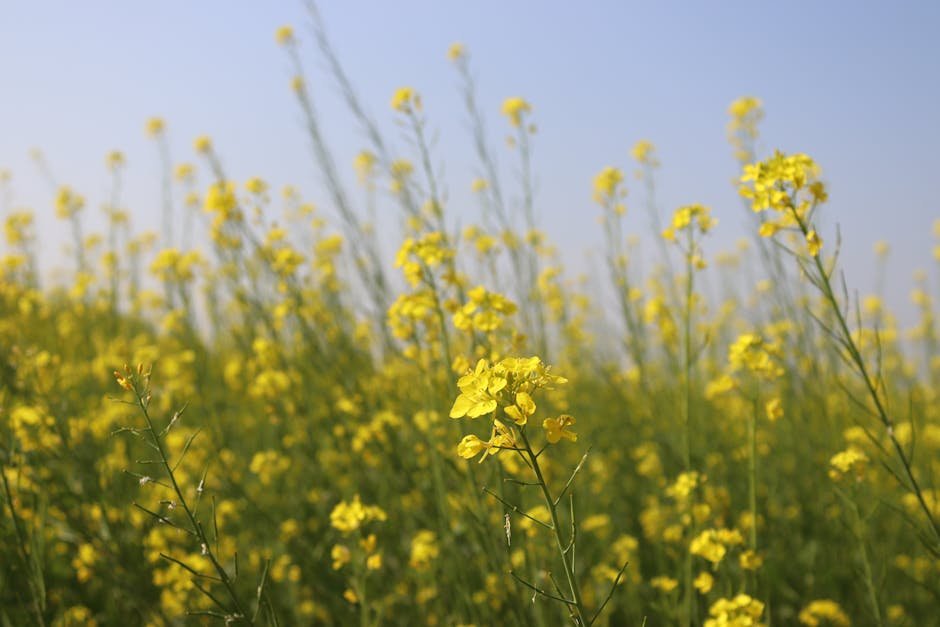
 Photo: placeholder pending image-fill pass
NMOOP / NMEO-Oilseeds: National Mission on Oilseeds
The National Mission on Oilseeds and Oil Palm (NMOOP) was launched in 2014-15 as the umbrella centrally-sponsored scheme to raise domestic oilseed production. Its oil palm component was carved out in 2021 as the separate NMEO-OP (Oil Palm Mission Pmkasi National), and the residual oilseeds component was reorganised in 2024 as the National Mission on Edible Oils — Oilseeds (NMEO-Oilseeds). The mission addresses the nine notified oilseed crops — groundnut, soybean, rapeseed-mustard, sunflower, sesame, safflower, niger, castor and linseed — and is the principal central programme for reducing India's 55-60 percent dependence on edible-oil imports.
Overview
NMEO-Oilseeds has an outlay of ₹10,103 crore for 2024-25 to 2030-31. It builds on the earlier NMOOP (Mini Mission I, II and III for oilseeds, oil palm and tree-borne oilseeds respectively) and on the Oilseeds and Pulses programme of NFSM. The mission targets raising domestic oilseed production from 39 million tonnes (2022-23) to 69.7 million tonnes by 2030-31, with edible-oil output rising from 12.7 million tonnes to about 25 million tonnes.
Strategy and components
- Seed component: production and distribution of certified/foundation seed of high-yielding and short-duration varieties through SAUs, KVKs and the National Seeds Corporation. 600+ ICAR-bred varieties of the nine oilseed crops are targeted.
- Cluster approach: 347 cluster districts notified, with 600+ "value chain clusters" of 5,000 ha each aimed at concentrated extension, mechanisation and FPO support.
- Productivity demonstrations: front-line and KVK demonstrations of integrated crop management (ICM), inter-cropping, ridge-and-furrow, balanced fertilisation, biotic-stress management.
- Mechanisation: subsidy on oilseed-specific implements — seed drills with inclined-plate metering, groundnut diggers and threshers, soybean threshers, mustard threshers, mini oil expellers.
- Procurement under PSS: when market prices fall below MSP, NAFED and state agencies procure under the Price Support Scheme; see Soybean Msp Procurement Mp and the broader Nafed Procurement Oilseeds Pulses Bharatdal programme.
- Tree-borne oilseeds (TBO): support for olive, jojoba, jatropha and oil-bearing tree species in marginal lands.
Eligibility
The mission is implemented in all major oilseed-growing states. State Departments of Agriculture submit Annual Action Plans for cluster districts. Farmers in cluster villages receive subsidised seed minikits (groundnut, soybean, mustard, sunflower), 50 percent subsidy on bio-agents, gypsum, micronutrients and rhizobium inoculants, and 40-50 percent subsidy on specific machinery (with higher rates for SC/ST, women and NE farmers). FPOs and oilseed-cluster cooperatives are central to the new value-chain approach.
Implementation
The Department of Agriculture & Farmers Welfare (Oilseeds Division) operates the mission, with ICAR-Indian Institute of Oilseeds Research (IIOR), Hyderabad as the national technical coordinator. ICAR-DRMR Bharatpur leads rapeseed-mustard, ICAR-IISR Indore leads soybean, ICAR-DGR Junagadh leads groundnut, ICAR-IIOR coordinates safflower, sunflower, sesame, castor, niger and linseed, and ICAR-IIOPR Pedavegi handles oil palm under NMEO-OP. AICRP-Oilseeds runs the variety-evaluation network across 60+ centres.
Limitations
The mission has been critiqued for (i) over-reliance on subsidy-driven seed minikits without addressing systemic constraints like rainfed area, irrigation gaps and price volatility; (ii) limited MSP procurement coverage outside Madhya Pradesh soybean and Rajasthan mustard; and (iii) the persistent yield gap (Indian oilseeds yield 1,100 kg/ha against the world average of 2,300 kg/ha) despite a decade of mission funding.
Related pages
See also: NMEO-OP oil palm, Edible-oil import policy, Pusa Bold mustard, Soybean JS-335, Soybean MSP procurement MP.
Sources
- National Mission on Oilseeds and Oil Palm. Department of Agriculture & Farmers Welfare.
- NMEO-Oilseeds Cabinet approval. Press Information Bureau.
- Oilseeds Production Programme. ICAR-Indian Institute of Oilseeds Research, Hyderabad.