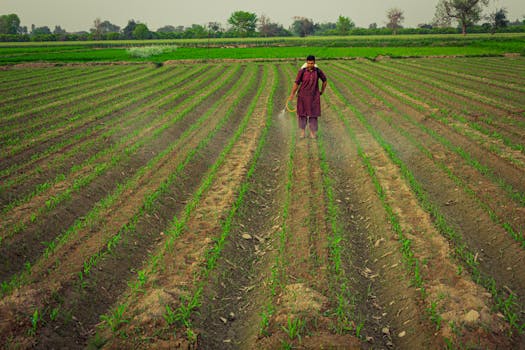
 Photo: Tamhasip Khan · Pexels License · source ↗
Counterfeit seeds and duplicate pesticides in vegetable farming
Counterfeit and sub-standard agricultural inputs are a recognised risk in Indian markets. Vegetable farming is especially exposed because high-value crops attract opportunistic supply chains for premium hybrid seed and branded pesticide packs, both of which are easy to imitate visually but costly to verify chemically.
Identification
Counterfeits include outright fakes that contain no active ingredient, dilutions of genuine product, re-labelled lookalike packaging and seed lots that fail germination or trueness-to-type. Routine field signs are unusually low germination from a "branded" lot, lack of efficacy from a label-rate pesticide spray, or pesticide phytotoxicity that does not match the stated formulation. Definitive confirmation requires laboratory analysis of the active-ingredient content.
Regulation and monitoring
Registration and labelling of pesticides is the statutory function of the Central Insecticides Board and Registration Committee (CIBRC) under the Insecticides Act 1968. The Directorate of Plant Protection, Quarantine and Storage hosts CIBRC, and state agriculture departments conduct sampling and enforcement. A new dedicated counterfeit-inputs law has been under preparation.
Damage and economic impact
In 2023-24 the government drew 1,33,588 seed samples, of which 3,630 (2.7%) failed; 1,81,153 fertiliser samples, of which 4.9% failed; and 80,789 pesticide samples, of which 2,222 (2.75%) were adjudged spurious. Industry estimates have put the share of fake or illegal pesticides in the Indian market as high as 25%, well above the official sample-failure rate, reflecting the gap between formal testing throughput and the wider market.
Management
Recognised mitigation steps for farmers include buying from licensed dealers and retaining the cash memo, checking holographic seals and batch codes against company verification tools, and reporting suspicious product to the local agriculture office. At the industry and policy level, mitigation depends on more sample drawing, faster prosecution under the Insecticides Act and accelerated rollout of the proposed counterfeit-inputs law.
References
- About CIBRC. Directorate of Plant Protection, Quarantine and Storage.
- Rise in spurious agricultural inputs 2023-24. Krishak Jagat.
- Tackling India's Fake Pesticides. CropLife case study.