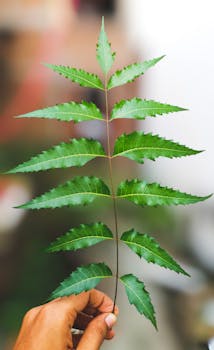
 Photo: Mohammad Ibrahim · Pexels License · source ↗
Neem cake
Neem cake is the de-oiled press residue from neem (Azadirachta indica) seed crushing. It is a dual-purpose input that supplies organic nitrogen and other plant nutrients while also acting as a soil-borne pest and nematode suppressor through residual neem limonoids.
Composition
- Macronutrients: approximately 4-6% N, 1-2% P2O5 and 1-2% K2O on a dry-weight basis
- Secondary actives: residual limonoids including azadirachtin, salannin and nimbin
- Form: dark brown coarse crumb or pellet, typical particle size 1-5 mm
- By-product status: a co-product of the neem-oil pressing industry
Mode of action
When incorporated into moist soil, neem cake decomposes slowly over weeks to months, releasing nitrogen primarily as ammonium and serving as a slow-release organic N source. The residual limonoids inhibit nitrification, which has the side benefit of reducing nitrogen losses from co-applied urea; this is the original rationale for neem-coating of urea (see Urea). In parallel, the limonoids suppress plant-parasitic nematodes (notably root-knot Meloidogyne species) and inhibit several soil-borne insect pests at the egg and larval stages.
Target use and dose
- Field-crop basal: 100-200 kg per acre, broadcast and incorporated at land preparation, often in combination with FYM.
- Orchard: 2-4 kg per mature tree, applied before monsoon or before flowering.
- Vegetables and nursery beds: blended into the planting bed at 5-10% by weight to suppress damping-off and nematodes.
- Paddy: surface broadcast with first-dose fertilizer (see Paddy First Dose Fertilizer).
Safety and regulatory status
FCO-notified as an organic fertiliser; non-toxic to humans, livestock and pollinators at field rates. Used in certified-organic systems. Storage in dry conditions preserves quality; humid storage causes microbial spoilage.
Related entries
See also: Neem Oil, Fym Farmyard Manure, Vermicompost, Panchagavya, Jeevamrutham Drava.
References
- Neem cake. Wikipedia.
- Neem Cake Nematode Suppression. PMC peer-reviewed review.