 Photo: Mplanine · CC BY-SA 4.0 · source ↗

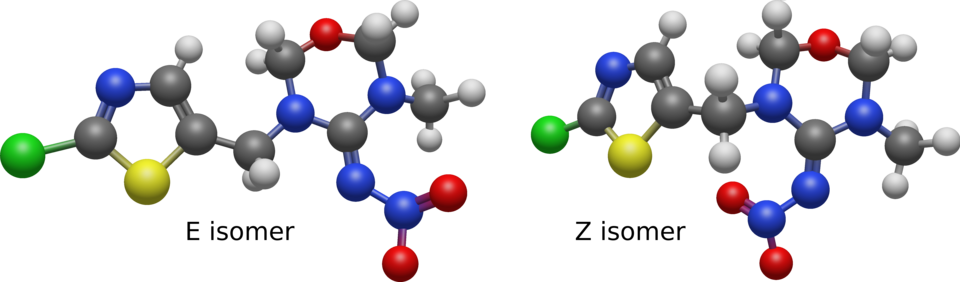
Thiamethoxam (Syngenta Actara)
Thiamethoxam is a second-generation neonicotinoid insecticide developed by Novartis (now Syngenta) and marketed in India as Actara 25% WG. It is one of the most widely used neonicotinoids in cotton, paddy and vegetable sucking-pest management.
Composition / Active ingredient
- Active ingredient: Thiamethoxam
- Formulation: 25% WG (water-dispersible granule)
- Chemical class: Neonicotinoid (second generation, thianicotinyl)
Mode of action
Thiamethoxam is a nicotinic acetylcholine receptor (nAChR) competitive modulator, classified under IRAC Group 4A. Within the insect it is metabolised to clothianidin, the same active produced from clothianidin-based products; this metabolite is the dominant active form. Action is by ingestion and contact, with strong systemic and translaminar movement through xylem and phloem.
Target use and dose
CIBRC-registered crops include paddy, wheat, cotton, mango, citrus, vegetables, tea and mustard. Target pests:
- Sap-suckers: aphids, whitefly, jassids, thrips, leafhoppers
- Rice: stem borer, brown planthopper, gall midge
- Tree crops: scales, mealybugs
Foliar dose is typically 40-80 g/acre depending on crop and pest; seed-treatment formulations (FS) are also used at 3-5 g/kg seed in cotton, paddy and vegetables.
Safety and regulatory status
Neonicotinoids including thiamethoxam are under regulatory restriction in the EU due to pollinator concerns; India retains its CIBRC registration but bee-safety label warnings apply around bloom. Whitefly resistance to neonicotinoids is widespread; rotation with Flonicamid Ulala (Group 29), Flupyradifurone Gracia (Group 4D — a structurally different nAChR modulator), Spirotetramat Movento (Group 23) and Diafenthiuron Pegasus (Group 12A) is essential.
Related entries
See also: Acetamiprid, Flupyradifurone Gracia, Flonicamid Ulala, Diafenthiuron Pegasus, Spirotetramat Movento, Pymetrozine Dinotefuran Combos.
References
- Actara Insecticide. Syngenta India / BigHaat.
- Actara — product label. Syngenta.