 Photo: DΛVΞ GΛRCIΛ · Pexels License · source ↗
Poultry shed height and ventilation
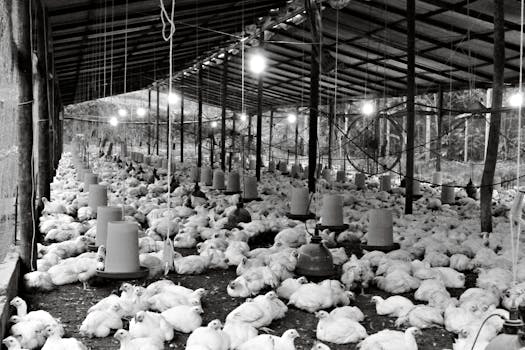
Shed height and ventilation are the principal climate-control levers of open-sided poultry housing. ICAR-Central Avian Research Institute and TANUVAS housing modules treat these together because the height of the shed governs how readily hot, ammonia-laden air leaves the bird zone and how easily cool fresh air enters. Inadequate height and orientation are among the most common low-cost design failures in Indian commercial poultry sheds.
Why height matters
Hot air rises. In an open-sided shed, a tall ridge with adequate ridge or gable openings creates a "stack" effect that draws warm air upward and out, pulling cooler outside air through the side curtains across the bird zone at floor level. A low ridge traps heat in the bird zone, raises internal temperatures and concentrates ammonia from the litter (Deep Litter System). Ammonia levels above 25 ppm depress feed intake, irritate respiratory epithelium and predispose birds to chronic respiratory disease.
Recommended targets
ICAR-CARI and TANUVAS housing guidelines specify a minimum ridge height of 14-15 ft (4.3-4.5 m) for commercial poultry sheds, with side walls of about 8-10 ft below the curtain level in open-sided designs (Open Poultry Shed). The long axis is oriented east-west so that direct sunlight falls on the short walls and the bird zone is shaded for most of the day. Roof overhang at the eaves is set to keep monsoon rain off the curtains while letting light and air enter. Ridge ventilators, gable louvres or whirlybirds add forced air exit.
Implementation
In summer, side curtains are raised fully through the heat of the day to maximise cross-flow; overhead fogger lines and pedestal or wall fans supplement natural ventilation in heat waves. In winter, curtains are lowered to reduce draughts, but ridge openings remain open to prevent ammonia and humidity build-up — a common error is to close the shed completely in cold weather, which causes wet litter and chick respiratory disease (Brooding Chicks). Ammonia level can be checked at bird height with simple Draeger tubes or by smell during morning walk-throughs.
Adoption context
The 14-15 ft ridge standard applies to broiler (Broiler Chicken) and commercial layer (Commercial Layer Farming) sheds. Mechanically ventilated environmentally controlled houses (Ec Poultry Shed) can use lower ceilings because air movement is set by fans rather than the stack effect. The same height-and-ventilation principles inform inter-batch sanitation: a tall shed is easier to wash, dry and fumigate (Biosecurity Cleaning Between Batches).
Limitations
Tall sheds cost more to build and roof, and require longer corner-pole timbers or stronger trusses. In some smallholder builds, ridge height is reduced to save cost, with predictable consequences in raised summer mortality (Poultry Mortality Management).
Related entries
See also: Open Poultry Shed.
References
- Environmental Management in the Broiler House. Aviagen.