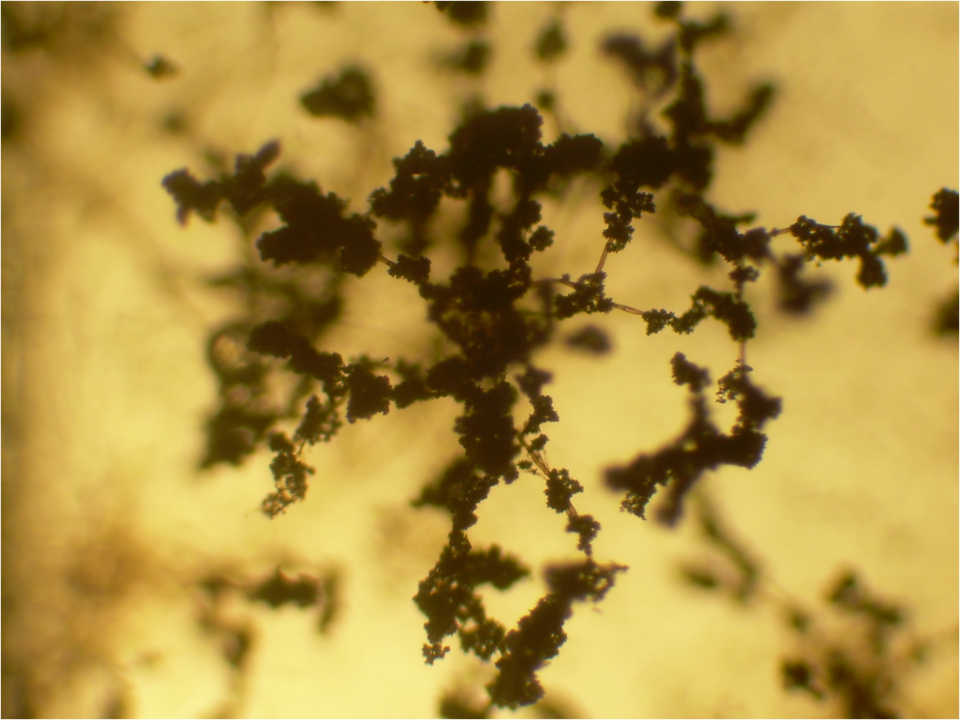
 Photo: Ninjatacoshell · CC BY-SA 3.0 · source ↗

Trichoderma viride / harzianum
Trichoderma viride and Trichoderma harzianum are antagonistic soil fungi widely used as biocontrol agents against soil-borne plant pathogens. They are the most extensively deployed biofungicides in Indian agriculture, targeting Fusarium, Rhizoctonia, Pythium, Sclerotium, Macrophomina and Ganoderma in field, vegetable, plantation and orchard crops.
Composition
- Active organisms: Trichoderma viride and Trichoderma harzianum (filamentous green-spored Hyphomycetes)
- Strain bank: ICAR-NBAIR and ICAR-NBAIM maintain reference strains under the FCO biopesticide schedule
- Standard Indian formulations:
- Wettable powder: commonly 1-2% w.p. with minimum 2 x 10^6 CFU/g (FCO specification)
- Liquid formulation: minimum 1 x 10^8 CFU/ml under FCO liquid biofertiliser specifications
- Carrier: talc, vermiculite or peat-based powders; aqueous suspensions for liquids
Mode of action
Trichoderma controls plant pathogens through four concurrent mechanisms: mycoparasitism (direct hyphal coiling and penetration of pathogen hyphae); production of cell-wall-degrading enzymes (chitinases, glucanases, proteases) that lyse pathogen mycelium; antibiotic production including gliotoxin, viridin and 6-pentyl-pyrone; and competition for nutrients and root space in the rhizosphere. Some strains additionally trigger induced systemic resistance in the host plant.
Target use and dose
- Seed treatment: 4-10 g powder per kg of seed before sowing.
- Seedling root dip: 10 g/L water for 10-30 minutes (paddy, vegetables).
- Soil application: 2-4 kg powder per acre mixed with FYM or vermicompost, broadcast at land preparation. ICAR-IIOPR Pedavegi has evaluated Trichoderma consortia against oil-palm basal stem rot, reporting up to 62% disease suppression in trials.
- Drip: 1 L liquid per 200 L water per acre.
Safety and regulatory status
Registered under FCO and Insecticides Act biopesticide schedules. Non-pathogenic to humans, animals and most non-target organisms. Should not be tank-mixed with copper sprays, chemical fungicides or hot fertiliser slurries that kill the inoculum.
Related entries
See also: Pseudomonas Fluorescens, Beauveria Bassiana, Metarhizium Anisopliae, Verticillium Lecanii, Microbial Biofertilizers, Waste Decomposer Ncof.
References
- Bioprospecting Trichoderma Against Ganoderma. Frontiers in Nutrition.
- Trichoderma: A Bio-Control Agent. MEG BRDC technical brochure.