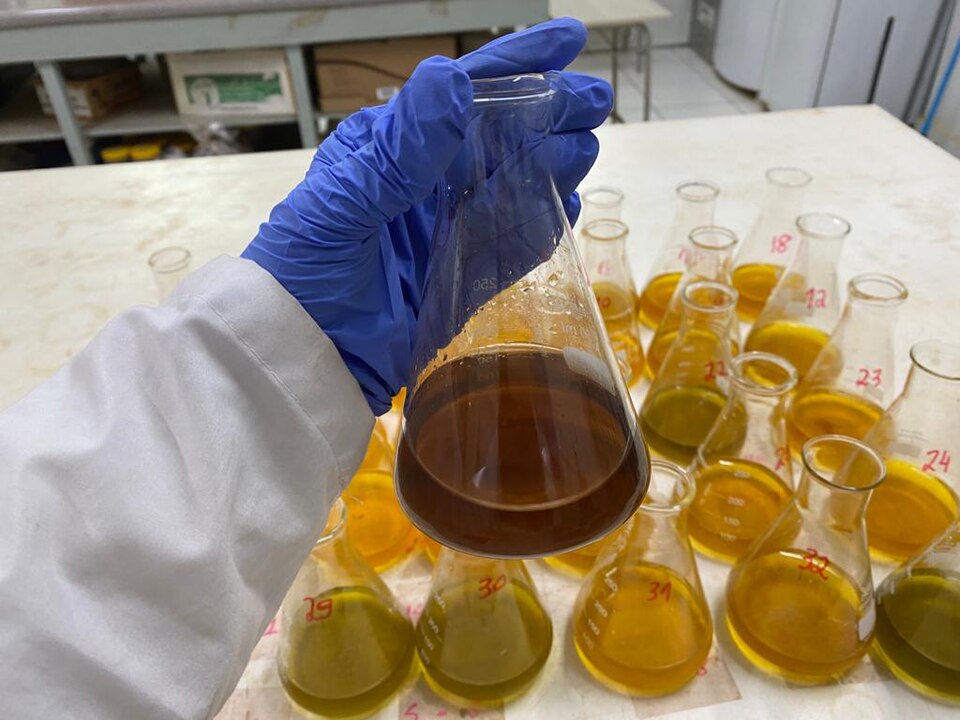
 Photo: Dra Taciara Zborowski Horst · CC0 · source ↗

Soil Testing (NPK, pH, EC, OC)
Soil testing is the laboratory analysis of representative field samples to characterise nutrient status and physicochemical properties, supplying the evidence base for fertiliser recommendations. In India it is delivered to farmers at scale through the Soil Health Card (SHC) scheme of the Department of Agriculture and Farmers' Welfare.
Principle
A small composite sample drawn from the plough layer is treated as representative of the field's chemical condition. Extracts and reagent-based assays measure the plant-available fractions of nitrogen, phosphorus, potassium, secondary nutrients and micronutrients, alongside bulk indicators such as pH, electrical conductivity (EC) and organic carbon (OC). The results are matched against critical limits to generate crop-specific dose advisories.
Implementation
The Soil Health Card scheme was launched on 19 February 2015 at Suratgarh, Rajasthan. Every farmer receives a card summarising twelve parameters: macronutrients N, P, K; secondary nutrient S; micronutrients Zn, Fe, Cu, Mn, B; and physical parameters pH, EC and organic carbon. Samples are typically drawn at 0-15 cm depth in a W-pattern across the field, tested at empanelled state, university or private laboratories, and uploaded to the soilhealth.dac.gov.in portal, which generates the uniform card and a crop-wise fertiliser recommendation. From 2022-23 the scheme is delivered as the Soil Health and Fertility (SH&F) sub-component of Rashtriya Krishi Vikas Yojana (RKVY).
Adoption context
Soil test reports underpin balanced fertilisation, scheduled fertiliser splits for Fertigation and targeted micronutrient correction such as zinc sulphate application against Zinc Deficiency Paddy. They also inform amendment doses for Soil Ph Management and tracking of Soil Organic Carbon Management over time.
Limitations
Sample representativeness depends on the W-pattern coverage and on operator skill; a single composite cannot reflect within-field variability on heterogeneous holdings. Available-nutrient extractants are correlated, not causal, with crop response, so the recommendation engine relies on locally calibrated critical limits. Repeat testing every 2-3 years is needed to track changes meaningfully.
Related entries
See also: Soil Organic Carbon Management, Soil Ph Management, Hidden Hunger Micronutrients, Zinc Deficiency Paddy, Fertigation.
References
- Soil Health Card portal. Department of Agriculture and Farmers' Welfare.
- Soil Health Card factsheet. Press Information Bureau.
- Celebrating a Decade of Soil Health Cards. Press Information Bureau.