 Photo: Alan R Walker · CC BY-SA 3.0 · source ↗

Bluetongue in sheep
Bluetongue is a non-contagious arthropod-borne viral disease of small ruminants caused by Bluetongue virus (BTV), an Orbivirus in the family Reoviridae. It is the most economically important viral disease of sheep in peninsular India, with regular outbreaks in Andhra Pradesh, Telangana, Karnataka, Tamil Nadu and Maharashtra during the post-monsoon vector season.
Identification and symptoms
Clinical signs appear after an incubation of 4-8 days and include high fever, depression, salivation, swelling and cyanosis of the lips and tongue (the cyanotic tongue gives the disease its name), nasal discharge, oedema of the face and ears, coronitis with lameness, and pulmonary oedema in severe cases. Pregnant ewes may abort or produce weak lambs. Goats and cattle are usually subclinical reservoirs.
Host species and life cycle
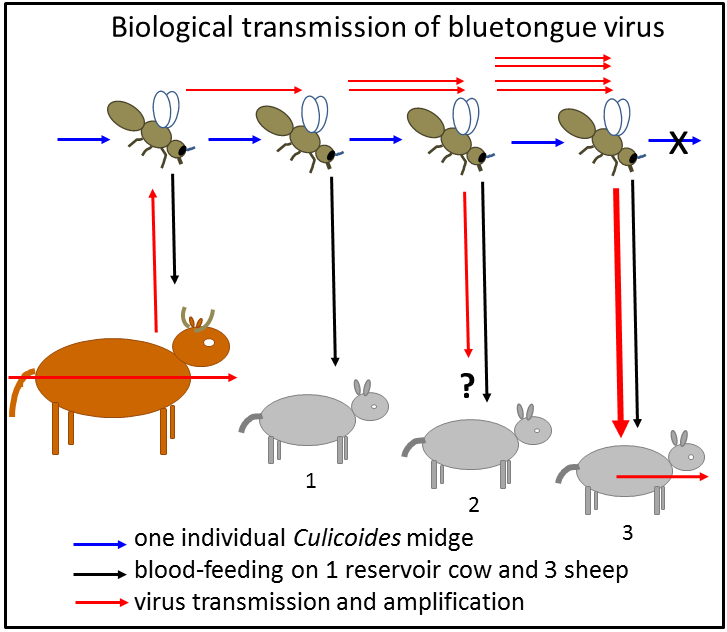
Sheep are the most clinically susceptible host; goats, cattle and buffalo carry the virus largely without symptoms. The vector is biting midges of the genus Culicoides, which breed in damp soil enriched with organic matter. Vector activity peaks in the post-monsoon months, producing a marked seasonal pattern of cases. The All India Network Project on Bluetongue (AINP-BT) at ICAR-IVRI Bareilly coordinates serotype surveillance and pathology research.
Damage and economic impact
Flock mortality of up to 30% has been reported in affected south Indian flocks, with case-fatality concentrated in lambs and breeds of European origin. Over the decade to 2005, India recorded roughly 500,000 cases and 64,000 deaths. Survivors lose body condition and wool quality, with knock-on effects on the lamb-fattening cycle for the Bakrid market (Ram Fattening Bakrid).
Management
Indian-origin attenuated polyvalent vaccines covering the locally important serotypes are deployed before the monsoon, ahead of the vector season. Vector control includes draining stagnant pools, housing animals between dusk and dawn when midges are most active, and limiting movement of flocks through high-prevalence zones. There is no specific antiviral therapy; supportive care includes anti-inflammatory drugs, fluid therapy and protection of ulcerated mucosae. Migratory flocks (Migratory Sheep Grazing) are at higher exposure risk because they traverse multiple agro-ecological zones during the vector season.
Related entries
See also: Nellore Sheep, Small Ruminant Vaccination Schedule.
References
- Updated review on bluetongue virus with reference to India. PMC.
- Livestock host composition explains bluetongue patterns in south India. Scientific Reports.