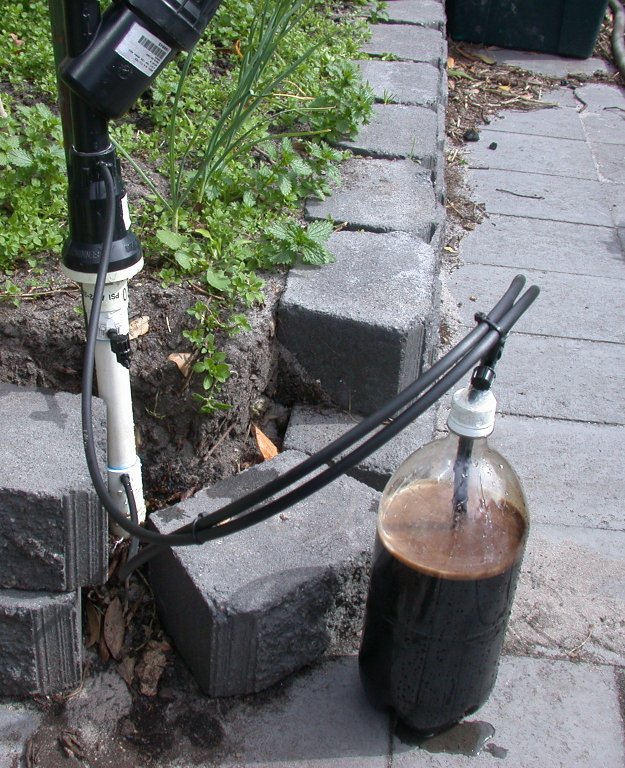
 Photo: graibeard · CC BY-SA 2.0 · source ↗
.jpg)
Drip Fertigation
Drip fertigation is the simultaneous application of water and water-soluble fertilizers through pressurised drip emitters synchronised with crop demand. The technique combines two distinct innovations — micro-irrigation and split nutrient application — into a single delivery system, lifting nutrient and water use efficiency relative to flood irrigation and broadcast fertiliser.
Principle
Conventional broadcast fertiliser delivers nutrients in two or three large applications across the season, much of which leaches below the root zone before the crop can absorb it. Drip fertigation injects soluble fertilisers — urea, monoammonium phosphate, potassium nitrate and complex grades such as 19:19:19, 13:0:45 and 12:61:0 — into the irrigation line in small, frequent doses matched to the crop's phenological stage. Water reaches roots at field capacity within a localised wet zone, dragging dissolved nutrients with it.
Implementation
The Government of India promotes drip fertigation under the Per Drop More Crop (PDMC) component of Pradhan Mantri Krishi Sinchayee Yojana (PMKSY), which subsidises drip systems and fertigation tanks. Small and marginal farmers receive up to 55 percent subsidy on system cost; other categories receive up to 45 percent. ICAR-IIHR publishes crop-specific fertigation schedules covering vegetables, fruit crops and flowers. Components include a head unit (filter, pressure regulator, Venturi or dosing pump), distribution mains and sub-mains, laterals and inline drippers sized to crop spacing.
Adoption context
Trials across crops and agro-ecologies record 30-50 percent yield gains under drip fertigation with proportionate water savings compared to flood or basin irrigation. Adoption is densest in horticultural crops — chilli, capsicum, tomato, banana, papaya, pomegranate, grape — where the return on investment is fastest, and increasingly extends to field crops such as maize, sugarcane and cotton.
Limitations
System capital cost is substantial even with subsidy. Clogging from sediment, biofilm and salt precipitation is the primary operational failure mode, requiring filtration and acid flushing. Water-soluble grades cost more per nutrient unit than conventional bagged fertilisers, and not all soil-applied amendments (compost, gypsum, organic manures) can be delivered through the system.
Related entries
See also Drip Fertigation Vegetables, Drip Fertigation Maize, Drip Fertigation Orchard, Mulching Vegetables and Mulching Drip Floriculture.
References
- Operational Guidelines of Per Drop More Crop, 2023. PMKSY, Ministry of Jal Shakti / MoA&FW.
- Fertigation Schedule. ICAR-Indian Institute of Horticultural Research, Bengaluru.