 Public domain · source ↗

Groundnut foliar nutrition and pest spray schedule
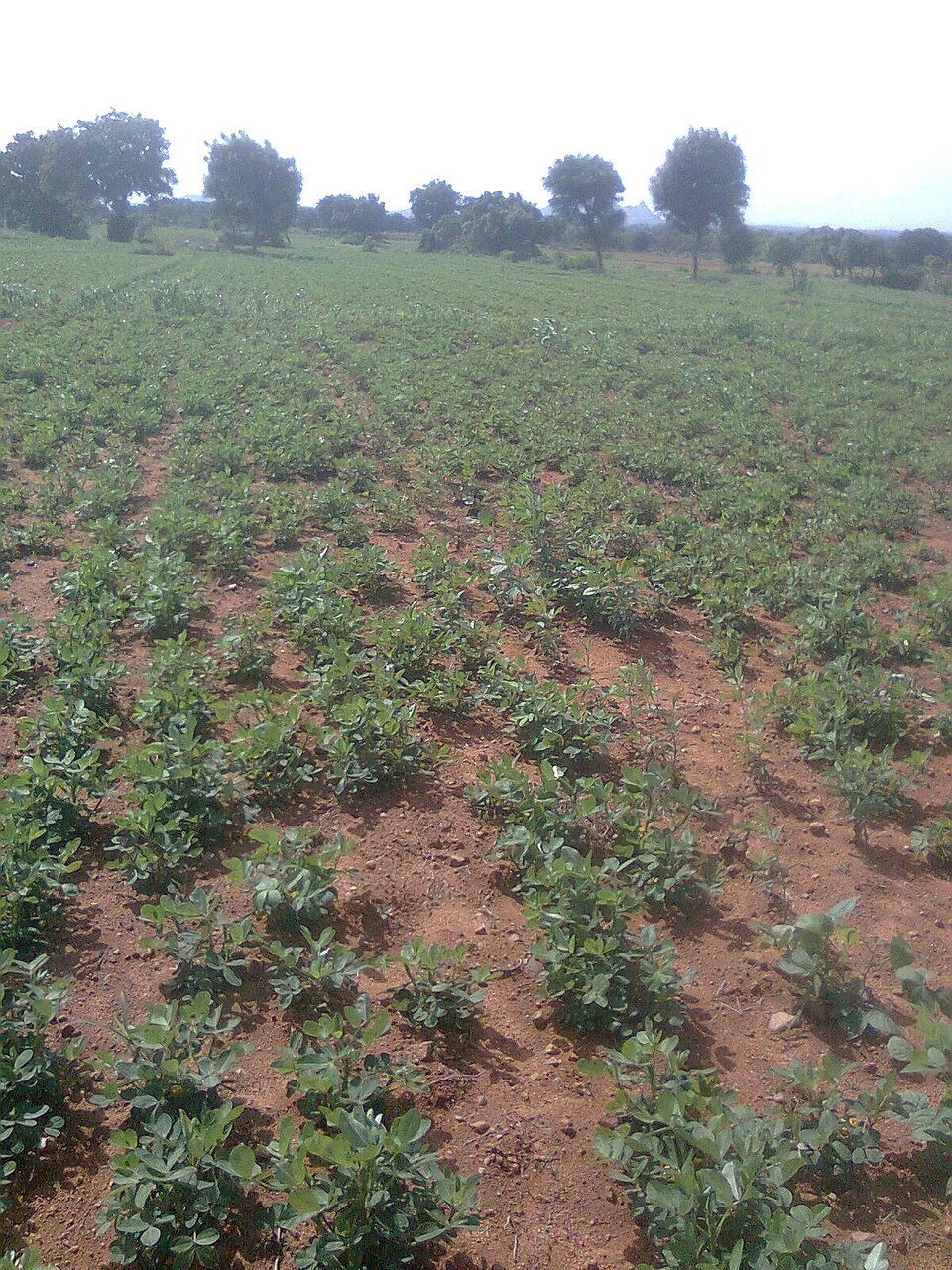
The groundnut foliar nutrition and pest spray schedule is the integrated cropping-cycle programme of seed treatment, intercropping, trap deployment and need-based foliar sprays used to manage sucking pests, defoliators and foliar diseases in commercial groundnut. The protocol combines preventive non-chemical components with stage-wise chemical interventions, principally during the pegging and podding phases.
Principle
Groundnut faces a recurrent pest and disease complex: sucking pests (jassids, thrips) and the peanut bud necrosis disease (PBND) vector early in the crop; tobacco caterpillar (Spodoptera litura) and red hairy caterpillar as defoliators mid-season; late leaf spot, rust and Sclerotium rolfsii through the latter half. Integrated management aligns prophylactic, monitoring and curative interventions across these phases to keep economic injury below threshold while limiting chemical inputs.
Implementation
Groundnut IPM as practised under ICAR-DGR Junagadh and the AICRP-Groundnut module combines soil-applied castor cake with Trichoderma seed treatment, intercropping (groundnut + bajra 4:1, pigeonpea border), pheromone traps at 10 per ha and need-based foliar sprays during pegging-podding. Documented chemistries include Thiacloprid 480 SC at 150 ml/ha at 20 days after sowing and Acetamiprid 20 SP at 100 g/ha at 35-40 DAS for sucking pests and PBND vector control. Foliar Propiconazole at 0.1 percent is the standard fungicide for late leaf spot and rust in rabi and summer crops.
Adoption context
The schedule is the AICRP-Groundnut recommendation across major groundnut tracts — Gujarat (Saurashtra), Andhra Pradesh (Anantapur, Kurnool), Karnataka, Tamil Nadu and parts of Maharashtra. ICAR-CRIDA rainfed groundnut technology compendium documents the package for rainfed semi-arid conditions.
Limitations
Spray timing depends on accurate scouting that smallholders often skip, leading to either preventive over-spraying or late curative sprays that miss the economic threshold. Insecticide resistance has been documented in groundnut Spodoptera populations, requiring rotation of modes of action. Weather-driven foliar disease pressure can outpace the recommended fungicide cycle in high-rainfall years.
Related entries
See also Ipm Vegetables, Raised Bed Groundnut, Pheromone Traps, Yellow Blue Sticky Traps and Pesticide Toxicity Colour Codes.
References
- Improved production practices for sustainable groundnut. Agronomy Journal review, 2025.
- Rainfed Groundnut Technology Compendium. ICAR-Central Research Institute for Dryland Agriculture (CRIDA).