 Photo: Tomasz Jagielski · CC BY-SA 3.0 · source ↗

Mastitis in dairy cattle and buffalo
Mastitis is bacterial inflammation of the mammary gland in dairy cattle and buffalo, and the single largest cause of economic loss in Indian dairying. Both clinical and sub-clinical forms reduce milk yield, degrade milk quality and shorten productive life. The disease is endemic in commercial herds and is closely linked to housing and milking hygiene rather than to a single discrete pathogen.
Identification and symptoms
Clinical mastitis presents with visible signs: hot, swollen, painful quarters, abnormal milk (clots, flakes, watery secretion, blood tinge), reduced milk let-down and, in severe acute cases, fever and depressed appetite. Sub-clinical mastitis carries none of these signs but causes a measurable drop in milk yield and a rise in somatic cell count. Detection of sub-clinical infections relies on cow-side tests such as the California Mastitis Test (CMT), in-line electrical conductivity sensors and laboratory somatic cell count of bulk-tank or quarter samples.
Host species and life cycle
The disease affects all dairy ruminants — HF crossbreds (Holstein Friesian Crossbred Cow), Jersey crossbreds (Jersey Crossbred Cow), Sahiwal (Sahiwal Cow) and other indigenous breeds, and Murrah buffalo (Murrah Buffalo). Causative organisms include contagious pathogens (Staphylococcus aureus, Streptococcus agalactiae, Mycoplasma), spread cow-to-cow at milking, and environmental pathogens (E. coli, environmental streptococci, Klebsiella) that invade the teat canal from manure, bedding and water. Roughly half of new sub-clinical infections occur during the dry period rather than during active lactation.
Damage and economic impact
Yield loss per affected quarter ranges from 10 to 25%. Sub-clinical mastitis depresses milk-fat and SNF percentage, lowering fat-and-SNF-based realisations (Milk Fat Snf Pricing). High bulk-tank somatic cell counts attract penalty deductions from organised dairies. Chronic shedders eventually have to be culled, shortening herd life and raising replacement cost.
Management
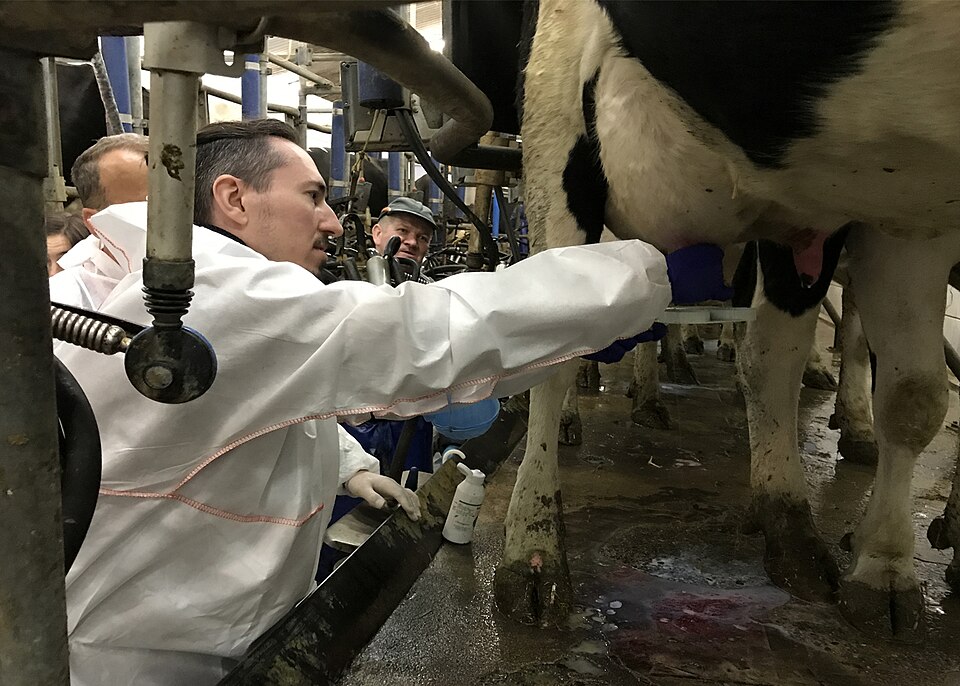
Control rests on five practices. (1) Milking hygiene — pre-dipping, individual cow towels, post-dipping with iodine or chlorhexidine teat dip. (2) Properly serviced milking machines with correct vacuum level and pulsation. (3) Clean, dry housing with sloped concrete flooring, twice-daily scraping of dung passages and dry bedding in cubicles (Dairy Shed Design). (4) Dry-cow therapy — intramammary antibiotic infusion at drying-off in cows with a sub-clinical infection history, supplemented increasingly by teat sealants. (5) Segregation or culling of chronic shedders identified by CMT screening. Sanitary insemination (Artificial Insemination Cattle) and brucellosis control (Brucellosis Cattle) reduce co-existing reproductive losses that compound mastitis economics.
Related entries
See also: Concentrate Feed Mix Dairy.
References
- Mastitis in Cattle. Merck Veterinary Manual.
- Comprehensive Prevention and Control of Mastitis in Dairy Cows. PMC.