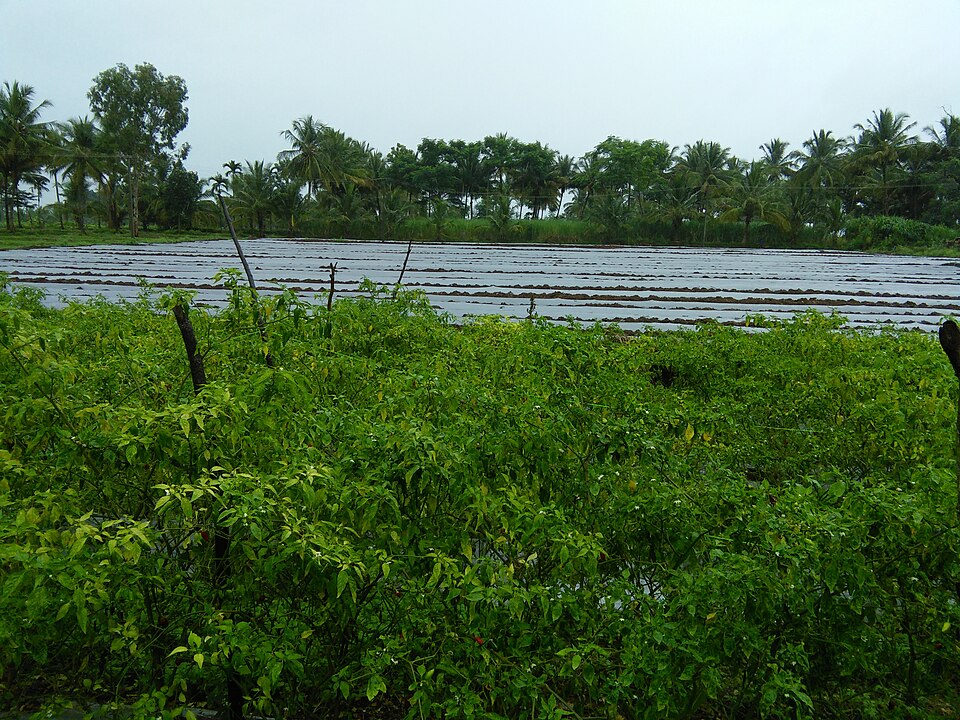
 Photo: T. R. Shankar Raman · CC BY-SA 3.0 · source ↗

Integrated pest management spray schedule for chilli
The chilli IPM spray schedule is the stage-wise crop-cycle programme for managing pest and disease pressure on commercial chilli, from nursery through pod set. The schedule codified by ICAR-IIHR combines preventive non-chemical measures with rotation of insecticide and fungicide modes of action across approximately eight need-based sprays.
Principle
Chilli is attacked by an unusually broad pest and disease complex: thrips (Scirtothrips dorsalis and the invasive Thrips parvispinus), mites, whitefly, aphids and fruit borers as insects; anthracnose, leaf spot and fruit rot as the principal diseases. Calendar-based prophylactic spraying drives resistance and disturbs natural enemies. The IPM schedule replaces calendar spraying with monitoring-led, threshold-triggered interventions while rotating chemistry to slow resistance development.
Implementation
ICAR-IIHR's package combines neem cake and Trichoderma at transplanting; three split nitrogen-potassium top-dressings during the vegetative phase; and approximately eight need-based sprays from 10 to 120 days after transplanting that rotate modes of action against thrips, mites, whitefly, aphids and fruit borers. Fungicide sprays target anthracnose, leaf spot and fruit rot. The protocol emphasises pheromone and sticky-trap monitoring before chemical intervention. Specific monitoring guidance for Thrips parvispinus is published by ICAR-IIHR as an emergent invasive of South Indian chilli.
Adoption context
The schedule is the recommended package across the major chilli belts of Andhra Pradesh (Guntur, Khammam), Telangana (Warangal, Khammam), Karnataka (Byadagi) and Tamil Nadu. State agriculture departments and KVKs disseminate the protocol through field demonstrations; FPOs supply the trap and biocontrol components.
Limitations
Thrips parvispinus has shown reduced sensitivity to several conventional chemistries since its 2021-22 outbreak, forcing growers to rotate aggressively across mode-of-action groups. Mid-season weather shocks can compress pest cycles and outpace the scheduled spray interval. Smallholder adherence to ETL-based scouting is uneven, and many growers default to calendar spraying despite extension messaging.
Related entries
See also Ipm Vegetables, Yellow Blue Sticky Traps, Solar Light Traps, Pheromone Traps, Drip Fertigation Vegetables and Pesticide Toxicity Colour Codes.
References
- Monitoring and Management of Thrips parvispinus. ICAR-Indian Institute of Horticultural Research.
- Division of Crop Protection. ICAR-Indian Institute of Horticultural Research.