 Photo: hatice · Pexels License · source ↗
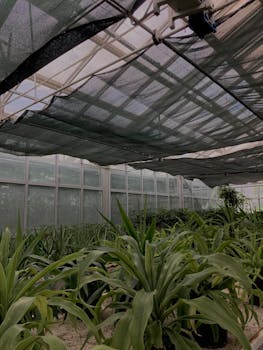
Capsicum (Shimla Mirchi) under polyhouse / shade-net
Polyhouse capsicum (Capsicum annuum), often called shimla mirchi or bell pepper, is a high-value protected-cultivation enterprise in India backed by ICAR-IIHR Bengaluru technology and central- and state-level subsidies under the Mission for Integrated Development of Horticulture (MIDH) and the National Horticulture Mission (NHM). The protected environment delivers yield, quality and price premiums over open-field cultivation.
Key characteristics
- Family: Solanaceae
- Polyhouse yield: 90-150 t/ha, roughly 2.4 times open-field cultivation
- Reference variety: Indra hybrid - medium-tall plants producing 3-4 lobed fruits, 10-12 cm long, 10 cm diameter and ~170 g weight
- Common structure: naturally ventilated polyhouse
Cultivation
Polyhouse capsicum is transplanted from raised nursery plug-trays into the protected structure, trained vertically on overhead wires and pruned to two or four leaders. Crops are fertigated through drip with separate stock tanks for macronutrients and micronutrients. Coloured fruit (red, yellow, orange) is harvested at full colour maturity and commands a substantial premium over green fruit. Naturally ventilated polyhouses with insect-exclusion nets are the most common structure type for the crop in India.
Adoption context
Government subsidy support typically covers around 47% of the polyhouse establishment cost; published case studies report Rs 35 lakh polyhouse projects with Rs 11 lakh state-government subsidy. The economics depend on consistent access to supermarket and quick-commerce channels that pay premium prices for graded coloured peppers. ICAR-CCARI publishes coloured-capsicum protocols specifically for naturally ventilated polyhouses.
Limitations
High up-front investment, dependence on skilled labour and sensitivity to extreme summer heat inside under-ventilated structures restrict adoption to peri-urban and well-capitalised producers. The crop is exposed to thrips-transmitted Tospovirus and mite outbreaks even inside protected structures.
Related entries
See also: English Cucumber Polyhouse.
References
- Protected Cultivation of Capsicum. ICAR-Indian Institute of Horticultural Research technical bulletin.
- Coloured Capsicum Cultivation under Naturally Ventilated Polyhouse. ICAR-CCARI.
- Protective Cultivation in Polyhouse: Coloured Capsicum Success Story. ICAR.