 Photo: Kashif Shah · Pexels License · source ↗
Raised-bed (bodelu) groundnut sowing
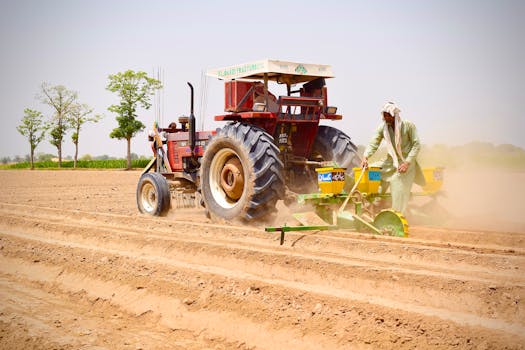
Raised-bed groundnut sowing — locally called bodelu in Telugu-speaking tracts — is the sowing of groundnut on broad raised beds or ridge-and-furrow systems rather than on flat land. The layout improves surface drainage, allows interculture under rainy-season standing water and supports timely harvest in heavy soils.
Principle
Groundnut is highly sensitive to standing water; waterlogging for as little as 4-6 hours during the rainy season damages the crop through root anoxia, pod rot and Aspergillus contamination. Flat sowing in heavy-textured soils retains pulses of surface water after each rain event. Raised beds elevate the root zone above the furrow, draining excess water laterally into furrows that channel it off-field. The bed surface also drains evenly, reducing localised ponding around individual plants.
Implementation
ICAR-DGR Junagadh, ICAR-CRIDA and ANGRAU recommend wide ridges and furrows on 0.4-0.8 percent slopes for rainfed groundnut in heavy-rain seasons. Standard layout is 60-90 cm wide beds with 30-45 cm furrows, formed by a bed-shaper drawn behind a tractor. Two to three rows of groundnut are sown across the top of each bed. Biodegradable mulching is sometimes added to conserve in-situ moisture between rains.
Adoption context
The technique is recommended for kharif groundnut in heavy black soils of Saurashtra (Gujarat), Anantapur and Kurnool (Andhra Pradesh), Karnataka and parts of Tamil Nadu. It is most relevant in tracts that combine vertisol soils with monsoon variability — areas where flat sowing has historically suffered drainage-related losses.
Limitations
Bed formation requires a tractor-drawn bed-shaper that not all farmers own; custom-hiring centres fill the gap unevenly. Manual sowing on raised beds is slower than on flat fields. In drought years the elevation can accelerate moisture loss from the bed surface, working against the crop rather than for it.
Related entries
See also Groundnut Foliar Spray Schedule, Mulching Vegetables and Plastic Mulch Orchard.
References
- Districtwise Promising Technologies for Rainfed Groundnut. ICAR-Central Research Institute for Dryland Agriculture.