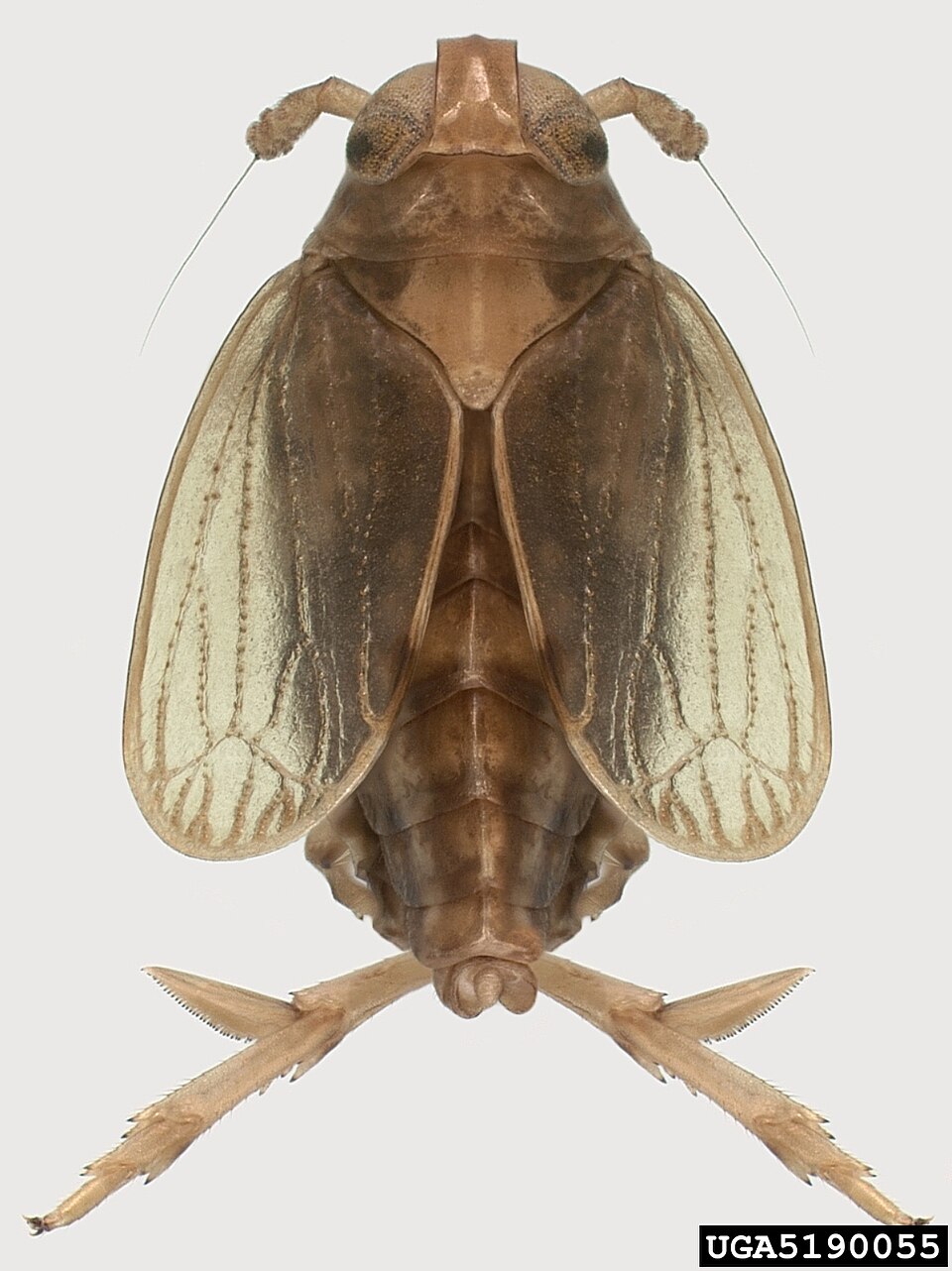
 Photo: Natasha Wright, Florida Department of Agriculture and Consumer Services, Bugwood · CC BY 3.0 us · source ↗

Brown planthopper (Nilaparvata lugens) in paddy
Nilaparvata lugens, the brown planthopper, is a phloem-feeding delphacid native to tropical and temperate Asia and the principal sucking pest of rice across the region. The species is closely tracked by IRRI and ICAR-IIRR breeding programmes because of its capacity to cause sudden field-scale collapse of paddy crops.
Identification and symptoms
Adults are 3-4 mm long with a brownish body; nymphs are paler. They congregate at the base of tillers above the water line. The signature symptom is round to oval 'hopper-burn' patches at 40-80 days after transplanting, where plants wilt and die. Sooty mould develops on honeydew that drips onto lower leaves.
Host crops and life cycle
The pest is essentially monophagous on cultivated rice. Females insert eggs into leaf sheaths and midribs. Generations are short and overlapping under tropical conditions, allowing rapid build-up after migrants colonise a new field. BPH is also a known vector of rice grassy stunt and ragged stunt viruses.
Damage and economic impact
In addition to direct phloem withdrawal that desiccates plants, the species transmits virus diseases that can amplify yield losses. Across Asia, the pest is responsible for repeated regional crop failures, and resistant variety breakdown is a recurring breeding problem because of biotype evolution.
Management
- Resistance: use varieties carrying functional Bph genes; rotate sources to slow biotype shifts.
- Cultural: avoid dense planting and prolonged continuous flooding; split nitrogen across tillering, panicle initiation and boot stages.
- Biological: conserve mirid bugs, spiders and dryinid wasps; monitor with light traps.
- Chemical: when thresholds are exceeded, the recommended chemistries are pymetrozine, dinotefuran, triflumezopyrim and thiamethoxam. Broad-spectrum pyrethroids and organophosphates are discouraged because they can trigger resurgence by killing natural enemies.
Related entries
See also: Brown Planthopper Paddy, Yellow Stem Borer Paddy, Leaf Folder Paddy, Rice Tungro Virus, Bpt 5204.
References
- Planthopper. IRRI Rice Knowledge Bank.
- Brown Planthopper: Nilaparvata lugens. CABI Plantwise.