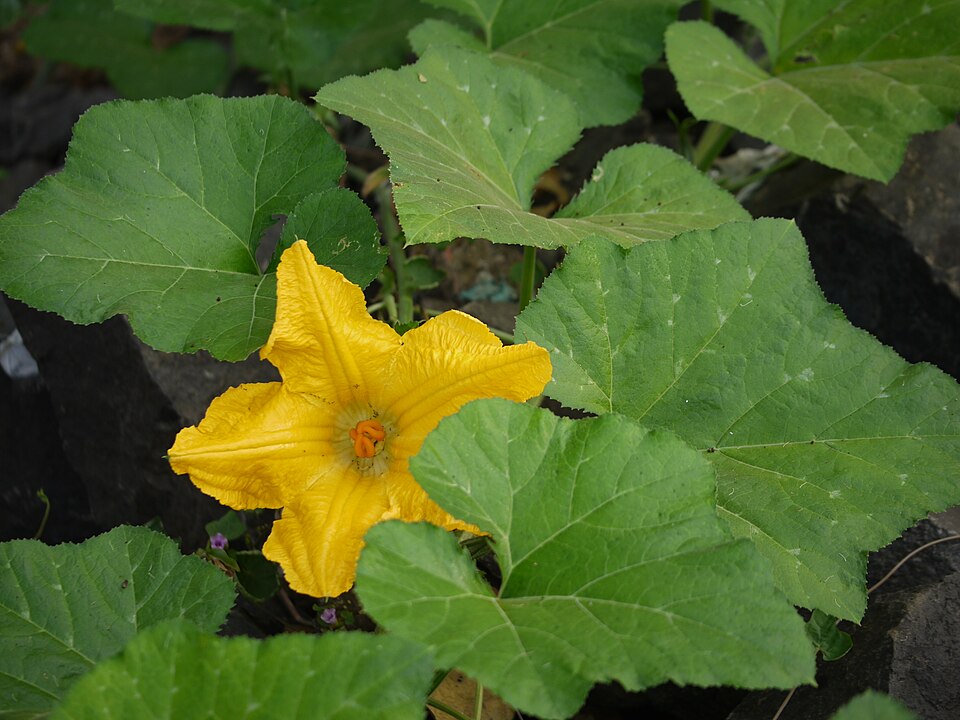
 Photo: Dinesh Valke from Thane, India · CC BY-SA 2.0 · source ↗
.jpg)
Pumpkin (Cucurbita moschata) / Gummadi
Pumpkin (Cucurbita moschata), known as gummadi in Telugu and kaddu in Hindi, is the most widely distributed Cucurbita species in India because it tolerates hotter conditions than C. pepo or C. maxima. It is a staple cucurbit used both as a tender vegetable and as a mature storage crop with extended shelf life.
Key characteristics
- Family: Cucurbitaceae
- Species dominance in India: C. moschata is the most widely distributed Cucurbita species (heat-tolerant)
- Optimum temperature: 18-30 degC
- Soil preference: sandy-loam to loam
Cultivation
Pumpkin is direct-sown on raised pits or beds and is typically allowed to trail on the ground or trained on low pandals. The crop is harvested at both stages - immature for use as a tender vegetable in regional cuisines, and mature for long-term storage as the rind hardens. Maturity-harvested fruits store for several months without refrigeration, making pumpkin an important household food-security crop. ICAR-IIVR Varanasi maintains improved varieties including Kashi Basant (notified 2022) and a parallel programme on landrace conservation for North-East India.
Pest and disease profile
Pumpkin shares the broad cucurbit pest complex described for Bottle Gourd, Ridge Gourd and Bitter Gourd: fruit fly (Bactrocera cucurbitae), red pumpkin beetle (Aulacophora spp., notably damaging on seedlings), downy and powdery mildew, and cucurbit mosaic viruses.
Adoption and use
The crop is grown on small to medium areas across most Indian states. Mature pumpkin is a staple ingredient in Indian cuisine, used in vegetable preparations, sweets and traditional festival foods.
Related entries
See also: Bottle Gourd, Ridge Gourd, Bitter Gourd, Snake Gourd, Ivy Gourd Dondakaya, Watermelon Crop, Teasel Gourd Aakakara, English Cucumber Polyhouse.
References
- Pumpkin varieties. ICAR-Indian Institute of Vegetable Research.
- Pumpkin. ICAR-IIVR.
- Horticulture: Pumpkin. TNAU agritech portal.