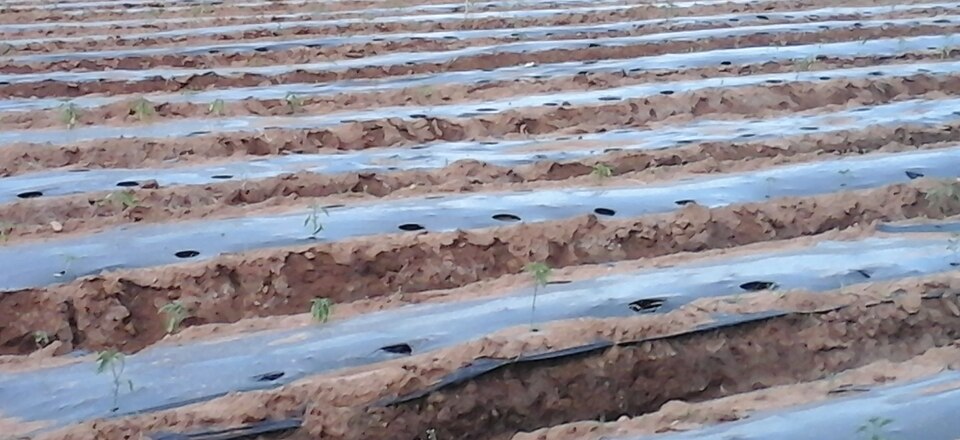
 Photo: Srimathiv1995 · CC BY-SA 4.0 · source ↗

Plastic mulching in vegetables
Plastic mulching in vegetables is the laying of polyethylene film over raised beds before transplanting tomato, brinjal, capsicum, melon, cucumber and gourds, almost always paired with drip irrigation below the film. The system conserves soil moisture, suppresses weeds, regulates root-zone temperature and reduces fertiliser leaching across the cropping cycle.
Principle
Polyethylene film placed over the bed creates an impermeable barrier between soil and atmosphere. Soil moisture is retained, weed seeds beneath the film fail to photosynthesise, and root-zone temperatures stabilise. Reflective films (silver-on-black) bounce light upwards into the lower canopy, deterring some sucking pests. The film slows volatilisation and leaching of fertiliser applied through the drip line and reduces salt accumulation at the surface.
Implementation
Standard film thickness is 25-30 micron silver-on-black or black for short-season vegetables and 50 micron for longer-duration crops. Beds are formed and the drip line laid before the film, which is then stretched over the bed and anchored at the edges by soil. Transplants go through perforations cut at the design spacing. The system is subsidised under PMKSY-PDMC when bundled with drip irrigation. Documented yield response includes earliness and higher marketable fruit set.
Adoption context
The package is now standard for commercial tomato, capsicum, brinjal, cucumber, melon and gourd cultivation across the major vegetable-growing states. It pairs naturally with raised-bed sowing, drip fertigation and pandal or staking systems for climber vegetables.
Limitations
Plastic film generates non-degradable polythene waste that must be collected and disposed of after each crop; field-level disposal practices are uneven. Initial bed preparation cost is higher than open-soil cultivation, although it is recovered within one or two cycles. Damaged film around plant holes can leak weeds. Hot summer sun can scald young transplants where film reflects heat back onto the stem.
Related entries
See also Drip Fertigation Vegetables, Pandal Construction, Tomato Staking Pruning, Plastic Mulch Orchard and Mulching Drip Floriculture.
References
- Plastic Mulch for Vegetable Production. Alabama Cooperative Extension.
- Operational Guidelines of Per Drop More Crop, 2023. PMKSY.