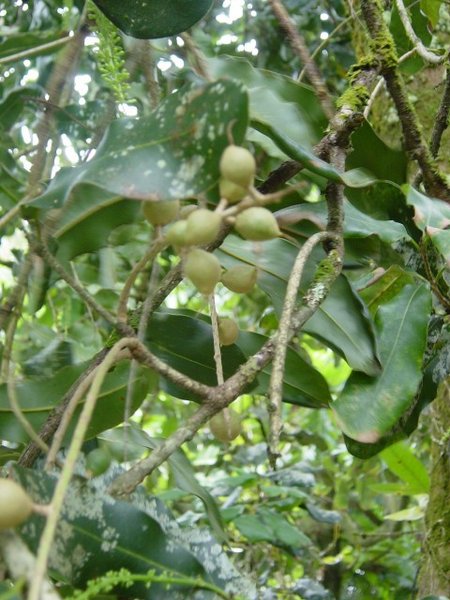

Macadamia nut cultivation
Macadamia (Macadamia integrifolia) is an evergreen subtropical tree native to Australia, grown commercially for its edible nut. It is a minor but expanding nut crop in India, with active interest in Karnataka, Kerala, Tamil Nadu and Odisha, and trial plantings in Himachal Pradesh under the state horticulture department's pre-ad-hoc package of practices.
Key characteristics
- Scientific name: Macadamia integrifolia
- Plant type: evergreen tree, 12-15 m at maturity; long-lived
- Climate: subtropical to mild-tropical highland with 1,200-2,500 mm annual rainfall
- Soil: deep, well-drained acidic to slightly acidic loam
- Bearing age: 4-5 years from planting for grafted plants
- Yield: around 2,400 kg nut/acre has been reported under favourable conditions
Cultivation
Commercial orchards use grafted plants of selected cultivars at spacings of around 8 x 5 m or 7 x 7 m. Pits are filled with topsoil, sand and well-rotted farmyard manure. Drip irrigation, regular mulching and protection from strong winds are standard. Trees are pruned to a central-leader form with well-spaced primary branches. Nuts are harvested after natural fall, dried to around 10% moisture and dehusked before cracking.
Pest and disease profile
Anthracnose, husk spot and root rots are the principal disease problems; macadamia nut borer, stink bugs and rats cause significant nut losses where present.
Adoption and use
Indian production is small compared with major exporters (Australia, South Africa, Kenya), and most domestic demand is met by imports. Bulletins from the ICAR system and from the Himachal Pradesh horticulture department provide the principal extension material for new growers.
Related entries
(No close sibling entries in this bundle group.)
References
- Macadamia nut chapter. ICAR Krishi portal.
- Pre-Ad-hoc Package of Practices for Macadamia Nut. Himachal Pradesh Horticulture Department.