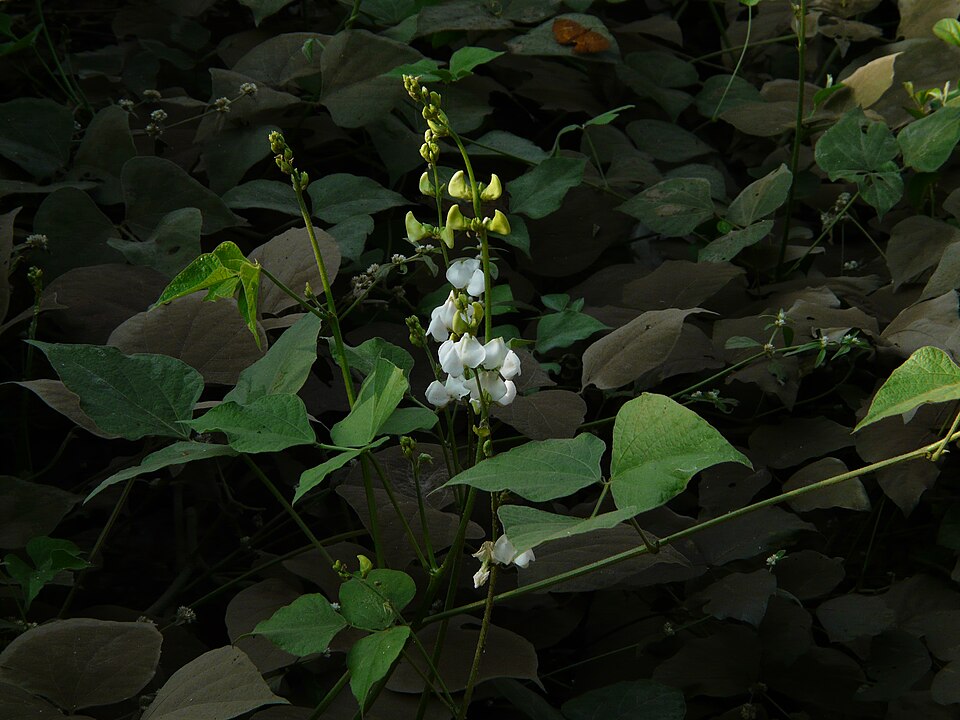
 Photo: Dinesh Valke from Thane, India · CC BY-SA 2.0 · source ↗
_(3052517274).jpg)
Hyacinth / Lablab bean (Lablab purpureus) / Chikkudu
Lablab purpureus, known as chikkudu in Telugu, avare in Kannada and mochai in Tamil, is a tropical multipurpose legume grown as a vegetable (tender pods), a pulse (dry seed) and a forage. It is cultivated throughout south India both as a kitchen-garden crop and as a commercial monsoon vegetable.
Key characteristics
- Family: Fabaceae (Leguminosae)
- Sowing window: July-August, with the onset of the monsoon
- Spacing: 1.0 x 0.75 m, 3-4 seeds per hill
- Seed rate: 50-60 kg/ha (pure crop)
- ICAR-IIHR varieties: Arka Jay, Arka Vijay (pole-type bush varieties)
Cultivation
Pure crops of lablab are typically sown at 1.0 x 0.75 m spacing at 3-4 seeds per hill with a seed rate of 50-60 kg/ha. Basal fertilisation comprises 10 kg of farmyard manure per pit plus 100 g NPK 6:12:12 with Azospirillum and phosphobacteria biofertilisers. Pole-type cultivars require trellis or pandal support; bush-types are grown without staking. The crop is harvested progressively over several weeks for tender pods, or once for dry pulse production.
Pest and disease profile
Key pests include aphids, leaf-eating caterpillar and the legume pod borer Maruca vitrata (Maruca Pod Borer), the latter being the dominant economic pest in commercial pole-type chikkudu in the monsoon. Cercospora leaf spot and Rhizoctonia wilt are the main diseases. Management combines weekly insecticide rotation and field sanitation.
Adoption and use
ICAR-IIHR Bengaluru has released Arka Jay and Arka Vijay as pole-type bush varieties for commercial cultivation. The crop is widely grown by smallholders and provides both household nutrition and cash income. Cluster bean (Cluster Beans) is a related arid-zone legume serving different markets.
Related entries
See also: Cluster Beans, Maruca Pod Borer.
References
- Origin, area, varieties, package of practices for hyacinth bean. TNAU eagri lecture notes.
- Indian Bean Cultivation Guide. Agrifarming.