 Photo: placeholder pending image-fill pass
Assam tea (Camellia sinensis var. assamica)
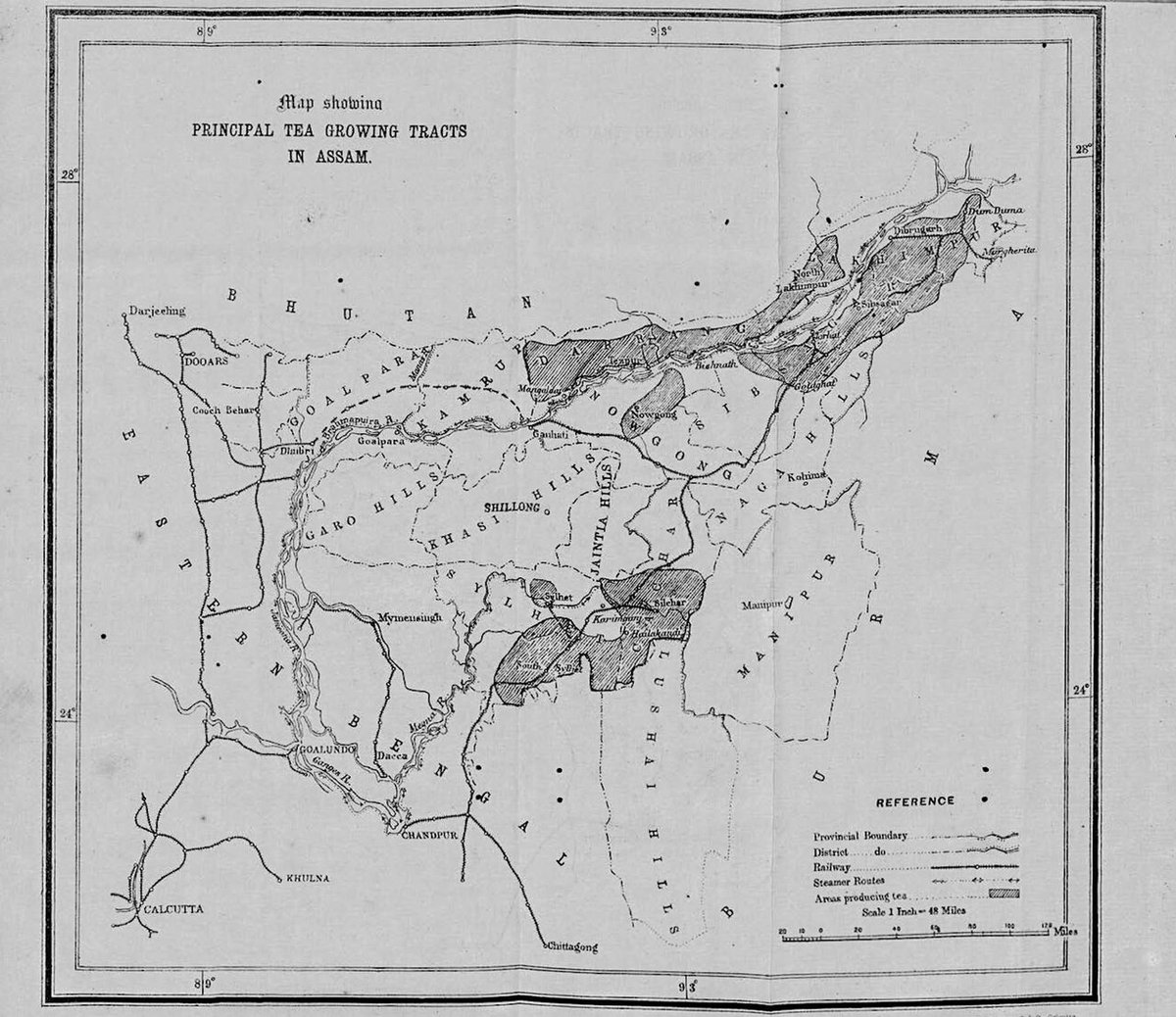
Camellia sinensis (L.) Kuntze var. assamica (Masters) Kitamura is the broad-leaved, tropical-evergreen tea variety native to the alluvial plains of upper Assam. It is the genetic backbone of India's bulk black tea industry: Assam alone produces about 50-55% of India's total made tea, almost all of it from assamica jats and their vegetative clones.
Botany and provenance
The variety was described from wild populations in the Brahmaputra valley by Robert Bruce and his brother in the 1820s, distinct from the China-type bushes the East India Company was trying to acclimatise. Mature assamica trees grow 10-20 m tall in forest; under plantation they are kept pruned to a 60-90 cm plucking table. Leaves are 15-20 cm long, dark green and glossy, with a serrated margin and prominent veins.
Key characteristics
- Habitat: hot, humid plains (1500-3000 mm rainfall, 16-32 °C), pH 4.5-5.5 deep loamy soil
- Bush type: vigorous, fast-growing, single-trunked
- Liquor: strong, full-bodied, malty, deep coppery infusion — ideal for CTC and orthodox black tea
- Plucking rounds: 7-9 day cycle in flush season (March-November)
- Yield: 1800-2500 kg made tea/ha for well-managed clonal estates
Cultivation
Assamica is propagated almost exclusively by single-node cuttings raised in polythene sleeves under a polypropylene shade tunnel (Tea Tv 1 Tocklai Vegetative Clone). Field planting is at 1.2 × 0.75 m (≈11,000 plants/ha) in single hedge or 1.35 × 0.75 m double hedge. Permanent shade with Albizia odoratissima and A. chinensis moderates light and adds nitrogen. Recommended NPK is around 140:35:140 kg/ha for young teas, rising to 240:60:240 for mature clonal sections. Pruning cycles are 4-5 years (medium prune at 50-60 cm).
Manufacture link
Assamica leaf is rich in polyphenols and caffeine, which oxidise readily to thearubigins; this gives the strong, brisk, coloury liquor preferred for CTC blends and milk tea. It can also be made as orthodox whole-leaf — the Tea Assam Orthodox Second Flush Gi of mid-May to June yields the prized "tippy golden" muscatel-malty character.
Pests and diseases
Main threats are the Tea Mosquito Bug Helopeltis Tea, red spider mite (Oligonychus coffeae), thrips (Scirtothrips bispinosus) and looper caterpillars; major diseases are blister blight (Tea Blister Blight Exobasidium) in hill sections and grey blight (Tea Grey Blight Pestalotiopsis) in plains.
Related entries
See also: Tea Camellia Sinensis China Type, Tea Tv 1 Tocklai Vegetative Clone, Tea Orthodox Vs Ctc Processing, Tea Ctc Cut Tear Curl Process, Tea Assam Orthodox Second Flush Gi.
References
- Tea Research Association Tocklai — Crop Profile. https://www.tocklai.org/
- Tea Board India — Statistics. https://www.teaboard.gov.in/