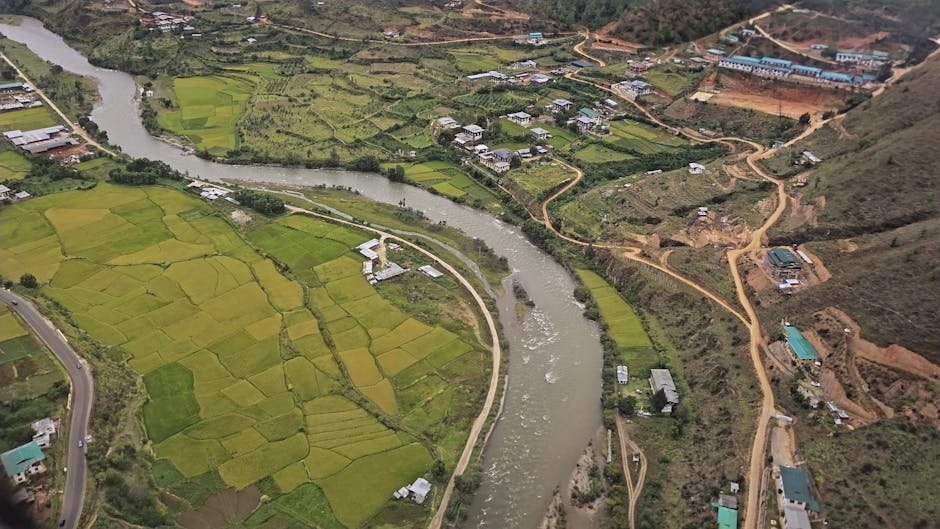
 Photo: Phuntsho Wangdi · Pexels License · source ↗
Watershed Development Component (WDC-PMKSY)
The Watershed Development Component of the Pradhan Mantri Krishi Sinchayee Yojana (WDC-PMKSY) is the principal central government instrument for funding watershed treatments on rainfed agricultural lands. It funds the soil and water conservation structures - compartmental bunds, check dams, farm ponds, percolation tanks, gully plugs - that sit upstream of farm-level water security in the Rayalaseema and other rainfed belts of India.
Scope and launch
The original Integrated Watershed Management Programme (IWMP) was subsumed into PMKSY as WDC in 2015. WDC-PMKSY 2.0, launched in 2021-22, runs through 2025-26 with a target of about 49.5 lakh hectares nationally. Implementation is by the Department of Land Resources, Ministry of Rural Development, working through state Watershed Development Departments and District Water Management Agencies (DWMAs).
Eligibility
The unit of intervention is the watershed (typically 5,000-10,000 ha micro-watershed clusters), not individual farms. Selection is based on water-stressed, rainfed, drought-prone or desert geographies as defined under the Common Guidelines for Watershed Development Projects. Tribal areas, Naxal-affected districts and aspirational districts receive priority. All landholders within a selected watershed - farmer-cultivators, common-land users and landless livestock keepers - are project participants.
Benefit structure
- Funding pattern: 60:40 between Centre and states for general states (revised in 2021 from earlier 90:10 for hilly/NE states).
- Indicative cost norms: about Rs 22,000 per hectare for general states and Rs 28,000 per hectare for difficult terrain, with revisions through implementation guidelines.
- Treatments funded include: in-situ moisture conservation (compartmental bunding - Compartmental Bunding Rainfed), drainage line treatments (gully plugs, loose-boulder check dams, masonry check dams), water harvesting (farm ponds - Farm Pond, percolation tanks, rainwater recharge pits - Rainwater Recharge Pits), entry-point activities and livelihood components.
- 60 percent of project funds go to natural resource management works; the rest funds capacity building, livelihood activities and project management.
Implementation
- The state Watershed Development Department prepares a state perspective plan; DWMAs prepare a district perspective and annual action plan.
- At the field level, a Project Implementation Agency (PIA), often a government line department or an empanelled NGO, works with a Watershed Committee composed of local users.
- Detailed Project Reports (DPRs) for each micro-watershed are prepared on a GIS-supported planning platform.
- Convergence with MGNREGS (Mgnregs Horticulture Plantation) is mandatory for the labour component; convergence with PMKSY-PDMC (Pmksy Micro Irrigation Subsidy) extends water-use efficiency on treated lands.
- In Andhra Pradesh, WDC-PMKSY anchors the structural pipeline that the legacy Neeru Meeru programme (Neeru Meeru Watershed Ap) put in place.
How farmers engage
Individual farmers within a selected watershed receive benefits in two ways. Their fields receive treatments (bunds, ponds, recharge pits) under the watershed plan, and they receive MGNREGS wages for the works on their land. Farmers do not file individual scheme applications; participation is mediated through the village Watershed Committee.
Related pages
See also: Neeru-Meeru watershed, Compartmental bunding, Farm pond, Rainwater recharge pits, MGNREGS horticulture plantation.
Sources
- Watershed Development Component of PMKSY - guidelines. Department of Land Resources, Ministry of Rural Development.
- WDC-PMKSY 2.0 Guidelines. Government of India.