 Photo: Mark Stebnicki · Pexels License · source ↗
Greeshma groundnut
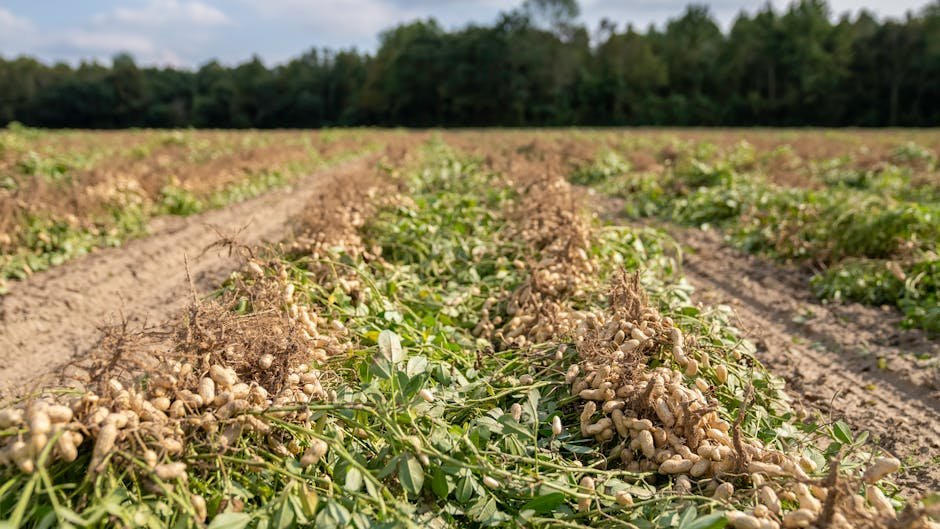
Greeshma is a Spanish-bunch groundnut variety bred for the summer-irrigated cropping system in southern India. The name (గ్రీష్మ = "summer" in Telugu) reflects its intended fit: rabi-summer sowing under assured irrigation rather than rainfed kharif. It is part of the south-zone groundnut variety basket developed under ANGRAU/AICRP-Groundnut programmes and is notified for cultivation in the Andhra Pradesh-Karnataka-Tamil Nadu summer zone.
Key characteristics
- Breeder: ANGRAU (south-zone summer release under AICRP-Groundnut)
- Type: Spanish bunch
- Duration: 110-120 days (rabi-summer)
- Pod yield: 22-30 q/ha under irrigation
- Shelling: 68-72%
- Reaction: tolerant to leaf spot and rust under irrigated conditions
Cultivation zones
Greeshma is recommended for rabi-summer sowing (December-January) under canal or borewell irrigation in the Kurnool-Nandyal-Tungabhadra tract, irrigated parts of YSR Kadapa, and the Krishna and Godavari delta tail-ends where farmers take a summer groundnut crop after rice or after rabi pulses. ANGRAU includes Greeshma in its summer-zone variety recommendations together with K-6, Narayani and Kadiri Amaravati. It is not intended for the rainfed kharif tract of Anantapur, where short-duration types like K-9 and K-6 are preferred.
Pests, diseases and management
Summer groundnut benefits from cooler night temperatures and assured water but faces high disease pressure as moisture is constant. Greeshma carries field tolerance to early and late leaf spot, but a two-spray fungicide schedule (mancozeb 0.25% at 30 DAS, hexaconazole 0.1% at 45 DAS, with tebuconazole+trifloxystrobin reserved for heavy infection) is still standard. Rust (Puccinia arachidis) becomes important in late summer; mancozeb covers it. Thrips and jassid sprays follow the routine ICAR-DGR advisory - imidacloprid 17.8 SL 0.3 ml/L or dimethoate 30 EC 0.03% need-based. Aflatoxin risk is low in summer because of dry pre-harvest weather, provided harvest is at proper pod maturity.
Usage and adoption
ANGRAU recommends a seed rate of 110-125 kg/ha (kernels) at 30 x 10 cm spacing; fertiliser 20:40:60 kg NPK/ha under irrigation, plus gypsum 500 kg/ha at flowering and need-based zinc (ZnSO4 25 kg/ha) where deficiency is identified. Five to six irrigations are typical, with critical irrigation at flowering, peg initiation and pod development. Because summer-irrigated yields exceed kharif yields by 30-50% and price realisation is better in the off-season, farmers with assured water resources prefer Greeshma-class summer varieties as a cash crop.
Related pages
See also: Groundnut Crop, Kadiri 6 Groundnut, Narayani Groundnut, Kadiri Lepakshi 1812, Tikka Leaf Spot Groundnut.
Sources
- Compendium of Notified Groundnut Varieties of India. ICAR-DGR Junagadh.
- Groundnut variety list - ANGRAU. ANGRAU.