 Photo: Mark Stebnicki · Pexels License · source ↗
ICGS-11 groundnut
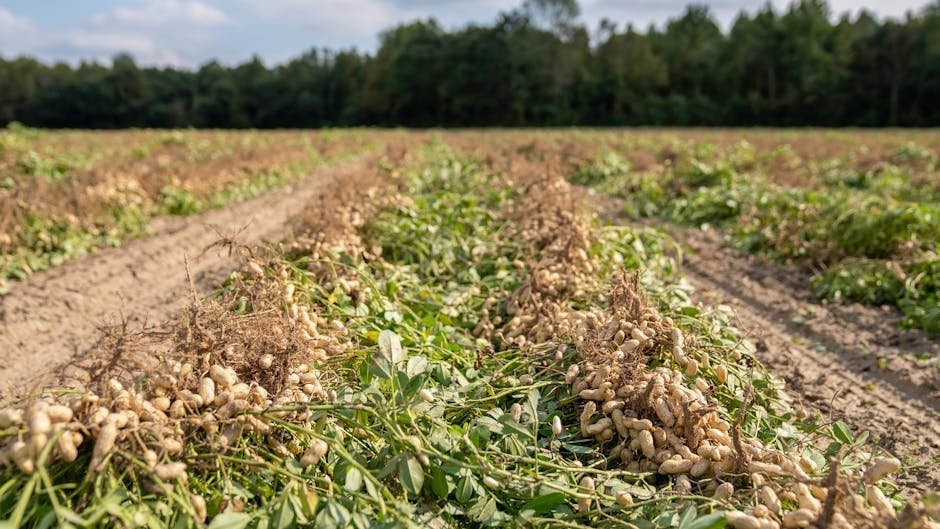
ICGS-11 is a Spanish-bunch groundnut variety developed at ICRISAT, Patancheru and notified in the 1980s for cultivation across the south Indian groundnut zone. It is a heritage variety from the ICRISAT Groundnut Selection (ICGS) series and was widely adopted in Andhra Pradesh, Karnataka and Tamil Nadu during the period when ICRISAT-bred materials moved into farmers' fields via state agricultural universities.
Key characteristics
- Breeder: ICRISAT, Patancheru
- Series: ICRISAT Groundnut Selection (ICGS)
- Type: Spanish bunch (erect habit)
- Duration: 105-115 days
- Pod yield: 16-22 q/ha under rainfed kharif; higher under irrigation
- Shelling: ~70%
- Kernel: medium-bold, tan-coloured
- Reaction: moderately tolerant to leaf spot; field-tolerant to drought
Cultivation zones
ICGS-11 was notified for cultivation in Andhra Pradesh, Karnataka and Tamil Nadu under the south-Indian groundnut tract. In the 1980s-90s it was one of the standard ICRISAT-derived recommendations for the Anantapur and Karnataka rainfed belts, and was used both directly by farmers and as a parent in ANGRAU and UAS-Dharwad breeding programmes. It is no longer the leading farmer variety - K-6, K-9, Kadiri Lepakshi and the newer ANGRAU releases dominate today - but ICGS-11 retains a place in the seed-chain and in research collections.
Pests, diseases and management
ICGS-11 has moderate field tolerance to early and late leaf spot. The standard ICAR-DGR/AICRP-Groundnut fungicide schedule applies where disease pressure is high - mancozeb 0.25% or carbendazim 0.1% at 30 and 45 DAS, switching to hexaconazole 0.1% or tebuconazole+trifloxystrobin under heavy late-leaf-spot pressure. The variety is susceptible to jassid and thrips - need-based imidacloprid 17.8 SL 0.3 ml/L or dimethoate 30 EC 0.03%. Stem rot is managed with Trichoderma seed treatment (8 g/kg) and gypsum 500 kg/ha at peg initiation. ICRISAT-led research using ICGS-11 contributed substantially to the understanding of foliar disease management in groundnut.
Usage and adoption
Seed rate, spacing and fertiliser recommendations follow the standard south-Indian groundnut package: 110-125 kg/ha kernels at 30 x 10 cm, 20:40:50 kg NPK/ha basal plus gypsum at flowering. ICGS-11's main current value is as breeding parent and as a heritage variety listed in ICAR-DGR and ICRISAT germplasm collections; it is a useful reference point when comparing the rate of yield improvement between 1980s-era and current ANGRAU releases.
Related pages
See also: Groundnut Crop, Kadiri 6 Groundnut, Kadiri Harithandhra, TAG-24 Groundnut, Tikka Leaf Spot Groundnut.
Sources
- ICRISAT Groundnut Overview. ICRISAT.
- Compendium of Notified Groundnut Varieties of India. ICAR-DGR Junagadh.