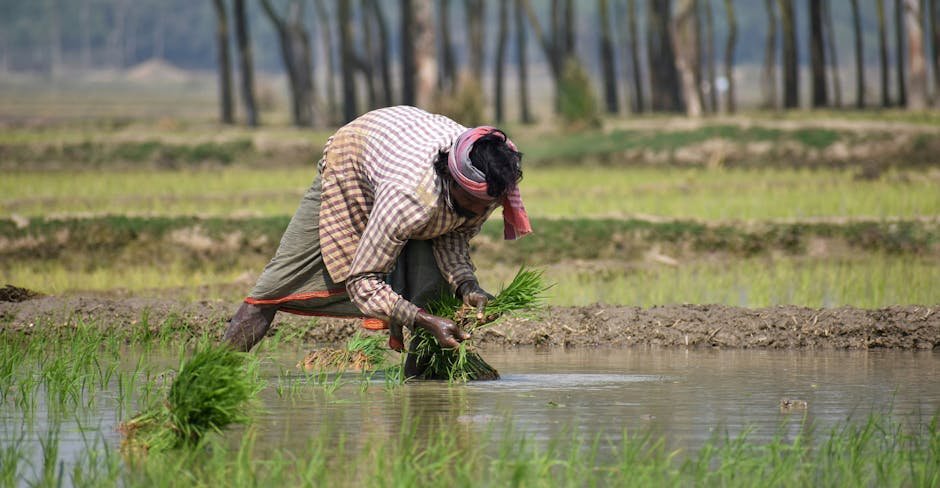
 Photo: Sajal's Gallery · Pexels License · source ↗
Redgram (pigeonpea) crop overview
Redgram (Cajanus cajan), known as kandi/kandulu in Telugu, arhar/tur in Hindi and tuvar in Gujarati, is India's most important rainfed pulse crop and the principal dal-grade legume for the country's daily diet. India accounts for more than 65% of world production. The Deccan plateau — Maharashtra, Karnataka, Telangana, Andhra Pradesh and northern Tamil Nadu — produces the bulk of the national output, with Anantapur, Kurnool, Mahabubnagar, Gulbarga and Vidarbha as the highest-area districts.
Key features
- Family: Fabaceae (legume); Cajanus cajan (L.) Millsp.
- Plant type: short-lived perennial grown as an annual; deep tap-root, woody main stem, indeterminate inflorescence
- Duration: short (120-150 d), medium (160-180 d) and long (180-220 d) groups
- Rainfall: 600-1000 mm; rainfed crop on light to medium soils
- Soils: well-drained sandy loams to medium black; intolerant of waterlogging
- Yield: 800-1500 kg/ha rainfed; 2000-2500 kg/ha under protective irrigation
Cultivation
Redgram is sown with the south-west monsoon in June-July as a sole crop or, more commonly in the Deccan, as an intercrop. Standard intercropping patterns include:
- Sajja-redgram 2:1 (Anantapur, Kurnool)
- Groundnut-redgram 7:1 (Anantapur)
- Sorghum-redgram 2:1 (Karnataka, Marathwada)
- Cotton-redgram 6:1 (Vidarbha, Telangana)
- Castor-redgram 6:1 to 7:1 (Telangana, north Karnataka)
Spacing depends on duration — 60 x 20 cm for short-duration sole crops; 90-150 x 20-30 cm for medium and long types and intercropping. Recommended fertiliser dose is 20 kg N + 50 kg P2O5 + 20 kg K2O per hectare, applied as basal; rhizobium and PSB seed treatment is standard. ICAR-IIPR and ANGRAU have released widely-adopted varieties — Maruti (ICP-8863), Asha (ICPL 87119), LRG 41, PRG 176, BDN 711, BSMR 853 and the early short-duration ICPL 88039.
Pests and diseases
The two diseases that limit redgram yields in the Deccan are:
- Fusarium wilt (Fusarium udum) — soilborne; controlled with resistant varieties such as Maruti, Asha and PRG 176, and 4-year crop rotation
- Sterility mosaic disease (SMD) — mite-transmitted virus; the most damaging where the eriophyid mite vector (Aceria cajani) is established
The major insect pests are the pod-borer complex (Helicoverpa armigera, Maruca vitrata, pod fly Melanagromyza obtusa) covered in the pod borer pulses page.
Usage and adoption
Almost all redgram is dehulled to make tur dal (toor dal), India's primary protein pulse. By-products — pod walls, broken split — are excellent goat and sheep concentrate. The crop's nitrogen-fixing role makes it valuable in dryland rotations; subsequent rabi pulses or cereals benefit from 40-60 kg/ha residual nitrogen. ICRISAT and ICAR-IIPR have released hybrid pigeonpeas (ICPH 2671, ICPH 2740) that combine wilt resistance and 25-30% higher yield potential, but seed cost limits commercial uptake.
Limitations
Long duration leaves the crop exposed to terminal drought and post-flowering pod-borer attack in dry years. Pod borer alone causes 20-50% yield loss in untreated crops. Mandi prices are highly volatile and the import-and-MSP balance shapes farmer returns more than yield itself. Sterility mosaic and wilt together can wipe out unsuited varieties.
Related pages
See also: Asha (ICPL 87119), LRG 41, Maruti, PRG 176, Redgram wilt, Pod borer in pulses, Anantapur district profile.
Sources
- Pigeonpea crop production technology. ICAR-Indian Institute of Pulses Research, Kanpur.
- Cajanus cajan package of practices. ANGRAU.
- Biology of Cajanus cajan. ICAR Biosafety Portal.