 Photo: Sutanu-1987 · CC BY-SA 4.0 · source ↗

Madras Red sheep
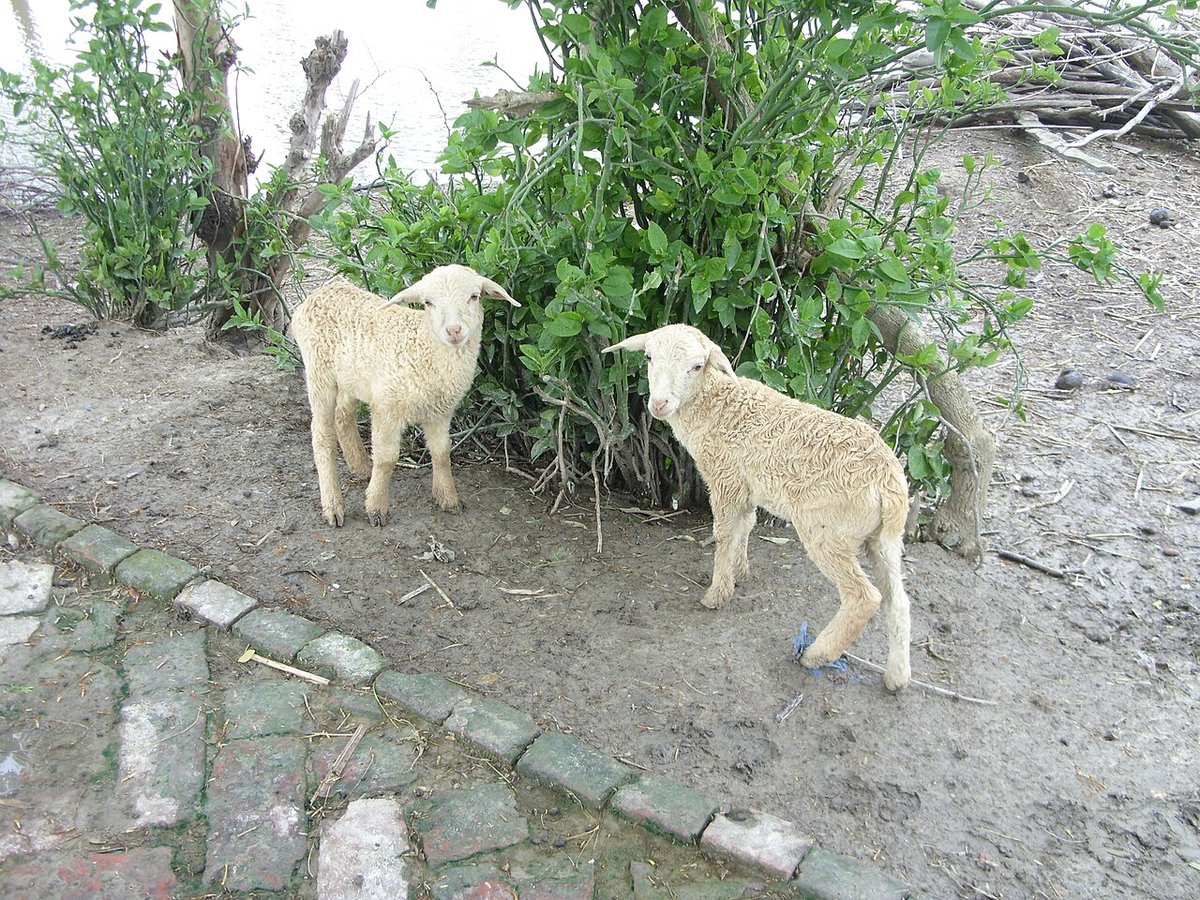
Madras Red is an indigenous hair-type meat sheep breed of northern Tamil Nadu, registered with the ICAR National Bureau of Animal Genetic Resources (NBAGR). It is the principal meat sheep breed of the Chennai-Kanchipuram-Vellore-Tiruvallur belt and extends into the adjoining Chittoor district of Andhra Pradesh, where it is raised by sheep-rearing communities (Kuruba/Yadava) for the meat trade supplying Chennai and other south Indian metros.
Origin and distribution
The breeding tract covers Chengalpattu, Kancheepuram, Tiruvallur, Vellore, Tiruvannamalai, Villupuram and parts of Cuddalore districts in Tamil Nadu. Through migratory and trade movements the breed has crossed into Chittoor and Tirupati districts of Andhra Pradesh, where it overlaps with the Nellore Brown sub-type of Nellore sheep (Nellore Sheep). The TANUVAS Sheep Research Station at Mannavanur and Kattupakkam, and the State Animal Husbandry Department, maintain elite Madras Red flocks for ram supply.
Morphology
Madras Red is a medium-sized hair sheep with a characteristic deep red to brown body coat, white belly and sometimes white patches on the face and legs. The coat is short and coarse - hair, not wool. Both sexes are typically polled (hornless); ears are medium and pendulous. The face profile is straight. Adult body weight is 30-35 kg in rams and 25-30 kg in ewes, with the breed being slightly larger than typical Deccani sheep and slightly smaller than Nellore.
Performance
Madras Red is exclusively reared for meat. Age at first lambing is 14-16 months. Lambing interval is 8-9 months and twinning rate is 15-25 percent - typical of South Indian hair sheep, lower than Black Bengal goat or Osmanabadi goat but adequate for commercial flock turnover. Lamb birth weight averages 2.3 kg and 6-month weight reaches 16-18 kg on village grazing supplemented with concentrate, going up to 25-28 kg on intensive feeding. Dressing percentage is 48-52 percent. Mutton from Madras Red is rated highly in the Chennai-Tirupati trade because of its lean carcass and lighter fat cover than Deccani.
Management
The breed is reared under an extensive flock-grazing system on common land, fallow fields and harvested croplands. Rams are penned at night under simple roofed sheds. Flock size ranges from 30 to 200 head. Standard animal-husbandry interventions include the small-ruminant vaccination schedule (Small Ruminant Vaccination Schedule) for PPR, FMD, HS, ET and sheep pox, deworming every 90 days and pre-monsoon bluetongue vaccination (Bluetongue Sheep). Migratory flocks (Migratory Sheep Grazing) are common during the lean post-monsoon period; flocks move into Chittoor and even Anantapur in dry years for grazing along tank beds and harvested fields.
Adoption and limitations
Madras Red is the meat sheep of choice across the Chennai-Tirupati supply chain, with ram fattening for festival markets (Ram Fattening Bakrid) a steady source of income for shepherds. Limitations are modest reproductive performance (compared with prolific goat breeds), small adult size (compared with Nellore) and slow growth rate without concentrate supplementation. The breed is at risk of dilution from indiscriminate crossing with Nellore and Deccani in the border districts; NBAGR breed conservation programmes operate to maintain pure flocks.
Related entries
See also: Nellore Sheep, Migratory Sheep Grazing, Sheep and goat vaccination schedule, Bluetongue Sheep.
Sources
- Madras Red - NBAGR breed profile. ICAR-National Bureau of Animal Genetic Resources.
- Performance evaluation of Madras Red sheep. TANUVAS.
- Sheep breeds of India. ICAR-Central Sheep and Wool Research Institute.