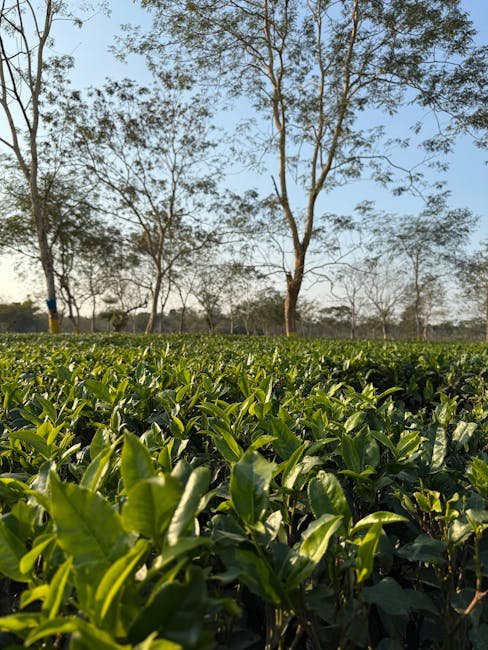
 Photo: placeholder pending image-fill pass
Assam orthodox second-flush tea (GI)
Assam orthodox tea is a Geographical Indication (registered as GI No. 117 in 2007) covering whole-leaf, traditionally manufactured tea from the alluvial plains of the Brahmaputra and Barak valleys of Assam. The second flush — plucked from late May to early July — is the most prized window because the slowed monsoon flush produces leaf with the highest concentration of "tippy golden" buds and the characteristic malty, full-bodied muscatel character that defines Assam tea on world markets.
Why second flush is special
After the rapid first-flush growth of March-April, leaf growth slows in late May as humidity rises and temperatures stabilise around 28-30 °C. Shoots emerge with a higher bud-to-leaf ratio and a thicker cuticle. Internal chemistry shifts: amino acids (especially theanine), volatile aldehydes and certain catechins peak. The result is a leaf that, processed orthodox, gives a thick, malty, honey-bright liquor with abundant golden tips — the so-called "tippy golden flowery" grades that earn 2-5× the price of CTC.
Key characteristics
- Geography: 24 districts of Assam, planted to assamica jats and clones (Tea Camellia Sinensis Assamica)
- Harvest window: late May to early July (second flush)
- Manufacture: orthodox only — rolling, oxidation, fluid-bed firing (Tea Orthodox Vs Ctc Processing)
- Grade markers: STGFOP, TGFOP, GFOP, FOP and broken/fanning grades; tip-rich
- Liquor: thick, malty, bright, full-bodied; classic milk and self-drinking tea
Manufacture detail
Second-flush leaf is withered for 16-18 hours to 62-66% moisture. Orthodox rolling on 46" rollers for 40-45 minutes preserves leaf integrity while bursting cells enough for oxidation. Fermentation runs 90-120 minutes at 26 °C and 95% RH. Firing on a fluid-bed drier at 100-110 °C arrests enzymes and brings final moisture to 2.5-3.0%. Sorting separates the long-leaf grades (FTGFOP, TGFOP, OP) from broken (BOP, BPS) and fannings/dust.
Trade
Most Assam orthodox is sold through the Guwahati Tea Auction Centre (and a portion through Kolkata) (Tea Auction System India Kolkata), with the bulk going to Iran, Iraq, the CIS, the United Kingdom and Germany. Premium tippy invoices from gardens like Halmari, Hattialli and Mangalam regularly cross ₹2,000-50,000/kg at speciality auctions. The Tea Board permits the Assam Orthodox logo only on tea grown, manufactured and packed inside the notified region under a certificate of origin.
Challenges
Orthodox accounts for only about 10-12% of Assam's production because CTC pays back capital faster. Maintaining orthodox lines requires older roller machinery, more floor space, and higher labour for fine plucking. Climate stress, mosquito-bug pressure and ageing labour rolls under the Plantation Labour Act further squeeze second-flush margins.
Related entries
See also: Tea Camellia Sinensis Assamica, Tea Darjeeling First Flush Gi, Tea Orthodox Vs Ctc Processing, Tea Tv 1 Tocklai Vegetative Clone, Tea Auction System India Kolkata.
References
- Assam Orthodox Tea — Geographical Indication Registry, Government of India. https://search.ipindia.gov.in/GIRPublic/
- Tea Research Association Tocklai — Assam Orthodox. https://www.tocklai.org/