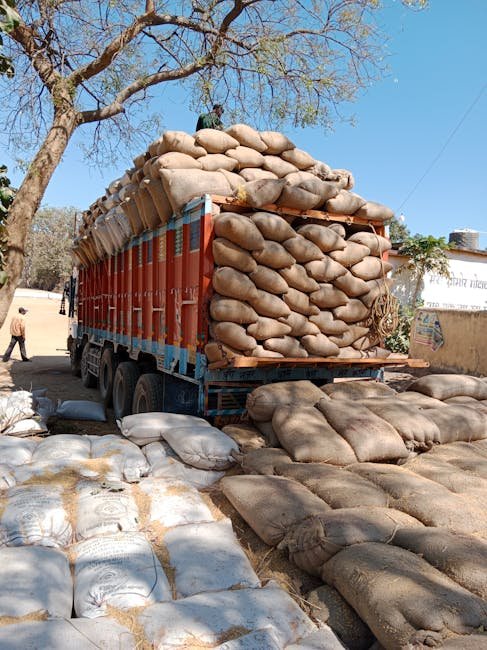
 Photo: mahalaxmi electricals and motor riwainding · Pexels License · source ↗
FCI procurement mechanism and decentralised procurement
The Food Corporation of India (FCI) is the central nodal agency that operationalises MSP procurement of paddy and wheat, builds the central pool of foodgrains for the Public Distribution System (PDS) and maintains the strategic buffer stock under the National Food Security Act 2013. It was constituted under the Food Corporations Act 1964 and is administered by the Department of Food and Public Distribution (DFPD).
Two procurement modes: Centralised vs Decentralised
FCI procures foodgrains in two structurally different modes:
- Centralised Procurement Scheme (CPS): FCI's own zonal offices procure paddy and wheat directly through state agencies in non-DCP states, take ownership at the gate, transport stock to its godowns and bear the entire economic cost. Carriage to consuming states is then funded by central food subsidy.
- Decentralised Procurement Scheme (DCP): State governments (and their nominated agencies) procure, store and distribute foodgrains within the state for PDS, with the Centre reimbursing the economic cost. Surplus over state PDS need is handed to FCI for the central pool.
DCP was launched in 1997-98 to bring procurement closer to farmers in non-traditional states, reduce FCI's transport burden and encourage state-level capacity. It now covers Chhattisgarh, Madhya Pradesh, Odisha, West Bengal, Bihar, Tamil Nadu, Karnataka, Kerala, Telangana (paddy), Andhra Pradesh (paddy), Uttarakhand, and others.
State-agency partners
In DCP states, partner agencies operate procurement: Telangana State Civil Supplies Corporation (see ikp-paddy-procurement), AP State Civil Supplies Corporation, Punjab Pungrain/Markfed/Punsup (CPS), Chhattisgarh State Marketing Federation, Odisha State Civil Supplies Corporation. FCI's own personnel operate procurement in Punjab and Haryana for wheat and in most CPS states for paddy.
Procurement workflow
The procurement window opens after CACP's MSP is announced (October for kharif paddy, April for rabi wheat). Farmers bring produce to notified Mandi or procurement centres, FAQ (Fair Average Quality) is verified through moisture meters and visual grading, the lot is weighed, a procurement slip is issued and MSP is credited to the Aadhaar-linked bank account through DBT — typically within 48-72 hours in DCP states, longer in CPS. Stock then enters the central or state pool.
Economic cost and subsidy
The economic cost of foodgrains (MSP + statutory charges + handling + storage + transport) is the basis for central food subsidy claims. The differential between economic cost and the PDS central issue price (Rs 2/kg wheat, Rs 3/kg rice under NFSA) is borne by the Centre. FCI is the single largest consumer of food-subsidy expenditure in the Union budget.
Reforms and criticism
The Shanta Kumar Committee (2015) recommended that FCI hand over procurement in surplus states to state agencies and concentrate on buffer-stock management and food security in deficit states. Storage losses, godown shortages and over-reliance on Punjab-Haryana have been persistent criticisms. The DCP model is increasingly seen as the future of grain procurement.
Related pages
See also: MSP — Minimum Support Price, MSP 23-crop list, IKP paddy procurement, Price Support Scheme, CCI cotton procurement.
Sources
- About FCI. Food Corporation of India.
- Decentralised Procurement Scheme. Department of Food and Public Distribution.
- Procurement of foodgrains. Press Information Bureau.