 Photo: Dr Photographer · Pexels License · source ↗
Co 86032 (Nayana) sugarcane
Co 86032, released in 2002 as "Nayana" by ICAR-Sugarcane Breeding Institute Coimbatore, has been the dominant workhorse cane variety of peninsular India — Maharashtra, Karnataka, Tamil Nadu, southern Andhra Pradesh and parts of Telangana — for over two decades. Together with Co 0238 (subtropical) and CoC 671, it underwrote India's run as the world's largest sugar producer in the 2010s. At its peak Co 86032 covered ~70% of Maharashtra cane area.
Key features
- Pedigree: Co 62198 x CoC 671, bred at ICAR-SBI Coimbatore
- Release year: 2002 (notified for peninsular zone — Maharashtra, Karnataka, AP, TN)
- Maturity group: mid-late maturing (12-14 months for plant cane)
- Cane yield: 100-120 t/ha plant cane, 75-90 t/ha ratoon (one of the best ratooning canes of the period)
- Sugar recovery (CCS): 11.8-13.5% — peninsular benchmark
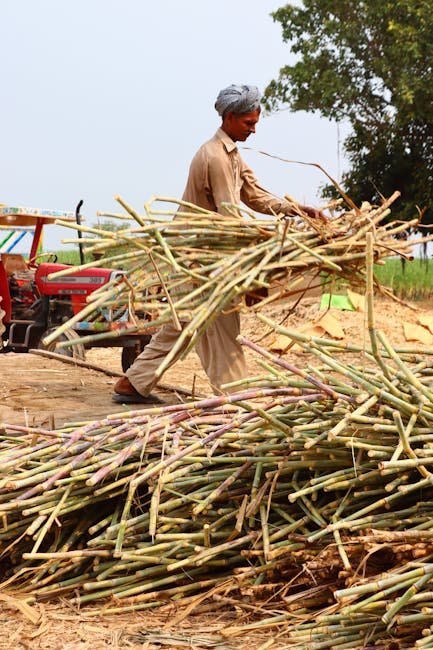
- Stalk type: thick, greenish-yellow with a light purple tinge, very heavy single canes, prone to lodging in high-N fields
- Special traits: very high single-cane weight (1.5-2.5 kg), good juice quality, excellent ratoon performance to 3-4 cycles
Cultivation zones
Co 86032 is suited to the 12-14 month "suru" and 18-month "Adsali" planting cycles of Maharashtra (Kolhapur, Sangli, Satara, Solapur, Ahmednagar, Pune, Aurangabad). Standard practice: 90-120 cm row spacing, 2-bud setts at 60,000-75,000 setts per hectare, with heavy irrigation (1100-1500 mm equivalent) and 250:115:115 kg NPK per hectare. The variety responds strongly to FYM and trash mulching.
Pests and diseases
Co 86032 is moderately susceptible to early shoot borer (Chilo infuscatellus) at the 30-60 day stage (see sugarcane-early-shoot-borer-chilo) and to woolly aphid (Ceratovacuna lanigera), which became a major peninsular pest from 2002 onward. The variety is field-tolerant to smut and reasonably tolerant to red rot, but susceptible to grassy shoot disease (phytoplasma) under poor seed management. VSI Pune recommends compulsory hot-air therapy of seed cane and tissue-culture multiplication for ratoonable plots.
Adoption
For more than a decade Co 86032 paid out the highest Maharashtra mill rates (FRP plus profit-sharing under the state SAP-equivalent) because of its recovery and tonnage. From around 2015 onward, declining ratoon performance, woolly aphid pressure and shifts to newer releases (Co 0265, CoM 0265 "Phule Savitri", Co 11015 "Atulya") have begun displacing it, but it remains the reference cane for the peninsular zone in any variety trial. Mills in Maharashtra report 11.5-12.8% recovery from Co 86032 cane in healthy plantings.
Related pages
See also: Sugarcane crop, Co 0238 sugarcane, Sugarcane ratoon crop, Sugarcane early shoot borer, Sugarcane recovery percentage, Sugarcane FRP.
Sources
- Varieties under cultivation. ICAR-Sugarcane Breeding Institute, Coimbatore.
- Varieties under cultivation. Vasantdada Sugar Institute, Pune.
- Sugarcane package of practices. Mahatma Phule Krishi Vidyapeeth, Rahuri.