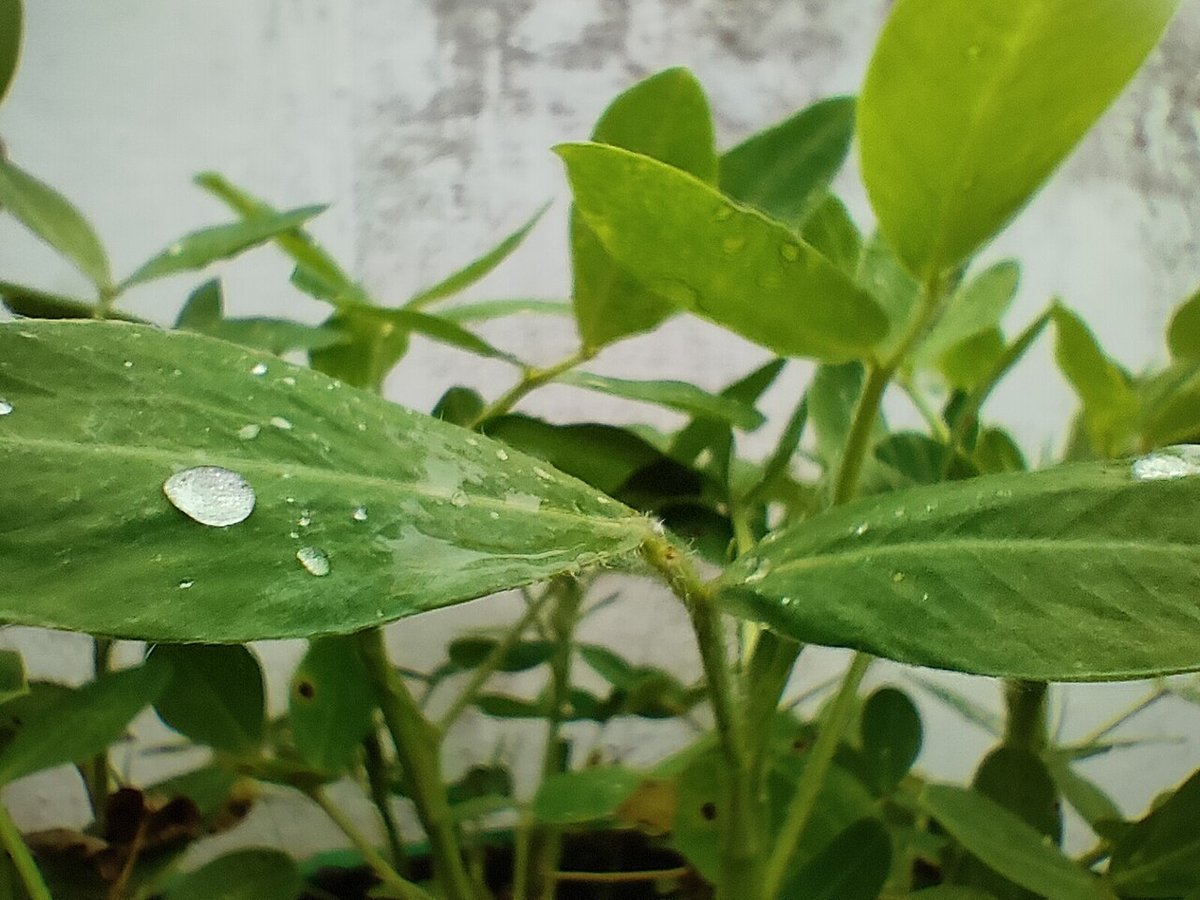
 Photo: Aadithya gbpian · CC BY-SA 4.0 · source ↗
.jpg)
Root-knot nematode in groundnut (Meloidogyne arenaria)
Root-knot nematode (Meloidogyne arenaria race 1, with M. javanica secondary) is a soilborne parasitic nematode that damages groundnut roots, pegs and developing pods. It is documented in the Andhra Pradesh, Karnataka and Tamil Nadu groundnut belts by ICAR-DGR (Junagadh) and ICRISAT (Patancheru). Damage is most severe in light-textured red and sandy soils with continuous groundnut monocropping.
Identification and symptoms
Above ground: patchy stunting, yellowing and wilting of plants in irregular spots across the field. Affected plants are easily uprooted. Below ground: characteristic galls or knots on roots, pegs and pod surfaces, ranging from pinhead-size on fibrous roots to larger irregular swellings on tap roots and pegs. On pods, galls appear as raised, warty outgrowths that disfigure the shell and reduce kernel grade. Severe infestation causes pod cracking through which Aspergillus (Aflatoxin Aspergillus Groundnut) and Sclerotium (Stem Rot Sclerotium Rolfsii Groundnut) gain entry.
Hosts and lifecycle
M. arenaria infests groundnut, tomato, brinjal, okra, cucurbits, tobacco and many weeds. The second-stage juvenile (J2) in soil penetrates the root tip, establishes a feeding site (giant cell), moults through J3 and J4 stages, and matures to a sedentary female that lays an egg mass of 200-500 eggs on the root surface. Lifecycle is 25-40 days at 25-30 deg C. The nematode survives off-season as eggs in soil and on alternate hosts and weeds.
Damage and economic impact
Pod and kernel yield reductions of 15-50 percent are reported from heavily infested fields in Anantapur and Chittoor. The disfigured pods are rejected at the HPS export grade. Aflatoxin contamination is significantly higher in nematode-damaged crops because of pod cracking. Once a field is heavily infested with M. arenaria, populations remain at damaging levels for many seasons.
Management
- Resistant varieties: NemaTAM (TifGuard) is the most resistant US variety; in India, COG-1 and partial resistance in some ICRISAT lines (ICGV 86699, ICGV 87165) have been reported. Most popular Indian varieties such as Kadiri-6 (Kadiri 6 Groundnut) and Narayani are susceptible.
- Crop rotation: rotate groundnut with non-host crops - sorghum, pearl millet, maize, sunflower and finger millet for at least 2 years to reduce field populations.
- Cultural: deep summer ploughing exposes eggs and juveniles to solar heat; remove and destroy crop residue and alternate-host weeds.
- Soil amendments: neem cake or castor cake at 250-500 kg/acre incorporated 2-3 weeks before sowing reduces populations. Pasteuria penetrans and Purpureocillium lilacinum bioagents (where available) provide partial suppression.
- Chemical: nematicides such as fluensulfone and fluopyram are registered abroad; in India carbofuran-class chemistries are restricted. Seed treatment with bioagents combined with rotation is the practical management package.
Related pages
See also: Stem rot of groundnut, Aflatoxin in groundnut, Groundnut crop, Early leaf spot, Late leaf spot.
Sources
- Root-knot nematode in groundnut. ICAR-Directorate of Groundnut Research, Junagadh.
- Plant parasitic nematodes of groundnut. ICRISAT, Patancheru.