 Photo: placeholder pending image-fill pass
Darjeeling first flush tea (GI)
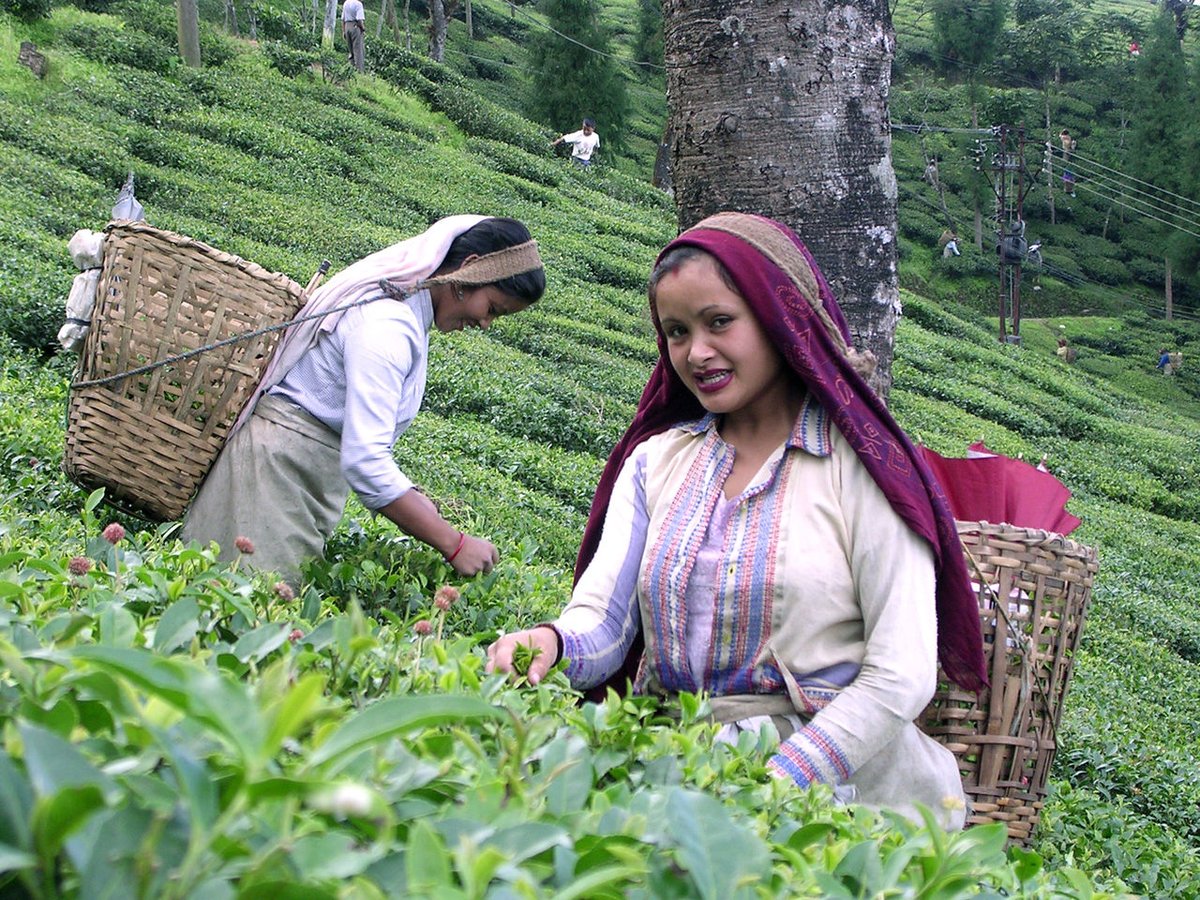
Darjeeling first flush is the earliest harvest of the calendar year — typically late February to mid-April — from the 87 Tea Board-registered gardens in Darjeeling, Kurseong, Mirik and parts of Kalimpong, all sited between 600 and 2250 m in the eastern Himalayas of West Bengal. It is protected as India's first agricultural Geographical Indication (registered 2004-05, GI No. 1) and was the first non-EU product to receive Protected Geographical Indication status in the European Union in 2011.
What makes a first flush
After the December-February dormancy, the China-type bushes (Tea Camellia Sinensis China Type) flush with light-green, slightly downy two-leaves-and-a-bud shoots that are exceptionally aromatic and low in tannin. Manufacture is strictly orthodox: long withering (16-20 hours) to lock in floral volatiles, gentle rolling, very light "first dhool" oxidation of 60-90 minutes, and firing on fluid-bed driers. The resulting tea has a greenish-brown leaf, a pale apricot-amber liquor, and a brisk, floral, sometimes grassy "green" character distinct from the muscatel of the second flush.
Key characteristics
- Harvest window: end February-mid April
- Plucking standard: two leaves and a bud, fine plucking
- Manufacture: 100% orthodox; light oxidation
- Liquor: light-bodied, brisk, floral, low astringency
- Output: ~20-25% of Darjeeling's roughly 7-8 million kg annual made tea
GI protection and the Tea Board logo
The Tea Board of India is the sole registered proprietor of the Darjeeling word and logo marks. Only tea grown, manufactured and processed in the notified gardens may carry the Darjeeling name; every export shipment must move under a Tea Board-issued Certificate of Origin and the round Darjeeling logo. Blending with non-Darjeeling tea is prohibited under the Tea Marketing Control Order.
Trade and pricing
First flush is sold both at the Kolkata private auction (Tea Auction System India Kolkata) and increasingly through forward private sales and ex-garden invoices, especially to Germany, Japan and the United States — the three biggest buyers. Auction realisations for top first-flush invoices have crossed ₹15,000-30,000/kg in recent seasons, though garden averages are far lower.
Challenges
Yields are constrained by ageing China-jat bushes, labour shortages, and climate stress: erratic February rains and warmer winters now routinely shift the flush calendar. Production has declined from a 10-million-kg peak to around 6-7 million kg made tea in 2022-2024.
Related entries
See also: Tea Camellia Sinensis China Type, Tea Assam Orthodox Second Flush Gi, Tea Orthodox Vs Ctc Processing, Tea Kangra Green Himachal, Tea Auction System India Kolkata.
References
- Darjeeling Tea — Geographical Indication Registry, Government of India. https://search.ipindia.gov.in/GIRPublic/
- Tea Board India — Darjeeling Tea GI Logo Scheme. https://www.teaboard.gov.in/